-
Serviced Offices Abu Dhabi - UAE
Showing page 1 of 1 Search again
-
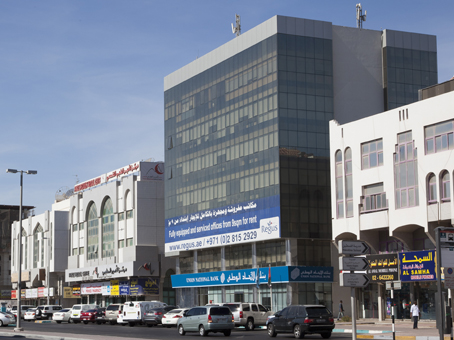
Al Hilal Bank Building, Abu Dhabi
This new business centre occupies the ground floor all the way to the fifth of this modern office building in the centre of Abu Dhabi. Read More
Facilities:
- Virtual Office Services Available
- Meeting Rooms
- Business Lounge
- High-Speed Internet Access
- Reception Staff
- 24 Hr Security
Call us for more details: 0800 0887 123 Add to List
-
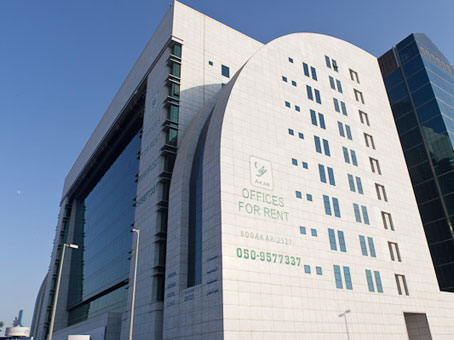
Al Arjan Building, Abu Dhabi
This business centre is located on one of the best-known roads in Abu Dhabi, Defense Road. Read More
Facilities:
- Virtual Office Services Available
- Meeting Rooms
- Business Lounge
- High-Speed Internet Access
- Reception Staff
- 24 Hr Security
Call us for more details: 0800 0887 123 Add to List
-
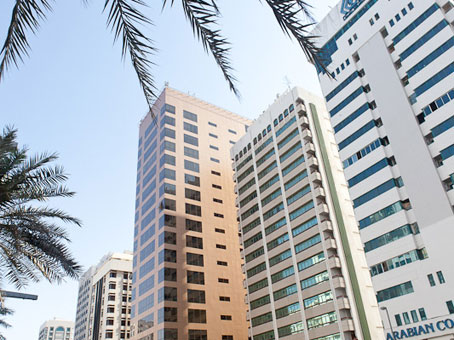
Bainuna Street , Abu Dhabi
The biggest Business Centre in the capital of the UAE, Al Bateen Centre is located on the south-east coast of the island in the new Bainunah District near to the UAE Central Bank and many of the ministries. Read More
Facilities:
- Virtual Office Services Available
- Meeting Rooms
- Business Lounge
- High-Speed Internet Access
- Reception Staff
- 24 Hr Security
Call us for more details: 0800 0887 123 Add to List
-
Al Odaid Office Tower, Abu Dhabi
This business centre in Abu Dhabi, capital of the UAE, is conveniently located on the main artery of Abu Dhabi, in the heart of the city. Read More
Facilities:
- Virtual Office Services Available
- Meeting Rooms
- Business Lounge
- High-Speed Internet Access
- Reception Staff
- 24 Hr Security
Call us for more details: 0800 0887 123 Add to List
-
Showing page 1 of 1
Abu Dhabi Office Space Guide
A guide to serviced offices and office space to rent in Abu Dhabi as well as general information that may be useful if you are thinking of renting office space in the UAE capital.
The city of Abu Dhabi lies on an island off the central western coast of the Persian Gulf in the Arabian Peninsula. Located approximately 250 meters from the mainland, the island is shaped like a T and is connected by bridges to two other outlying islands. Today Abu Dhabi is one of the largest and richest cities in the Middle East, however started life as a small coastal settlement in the 16th century. The area was settled by the Bani Yas Bedouin tribe, from which a subsection, the Al Nahyan family, emerged as predominant. The emirate is still ruled by the Al Nahyan clan today. The main bulwark of Abu Dhabi’s economy in the early days of its existence was the pearl trade. At that time the Persian Gulf was the centre of the trade and Abu Dhabi thrived from the industry of its pearl divers. During the 19th century Abu Dhabi and the surrounding emirates entered into treaties of trade and protection with Great Britain, the predominant power in the region at the time. Great Britain’s main intention was to counter the pirates in the region as well as engage in trade with Abu Dhabi and the surrounding area. However as the pearl trade declined in the early 20th century the potential of the oil industry in the area was recognized. In the late 1950s and 60s massive oil exploration was conducted by mostly French and British companies, leading to the discovery of vast oil shelves off the coast of Abu Dhabi and the other emirates. In the 1970s Abu Dhabi, along with Dubai and several other emirates formed the United Arab Emirates (UAE). Today the UAE is the predominant power in the Persian Gulf and has a thriving economy based on oil, tourism and trade.
Abu Dhabi’s economy has grown steadily in the last few years and the region’s recent unrest has highlighted the city’s stability. In the last year prime rents have fallen by two percent to AED 2,250 per square metre per year. The rents are likely to fall even farther in the next few years as new supply hits the market. Consequently landlords are offering major incentives and it is very much a renters market. Among the disadvantages of Abu Dhabi’s CBD are heavy congestion, lack of parking and insufficient infrastructure.