
A guide to flexible serviced offices, fitted and managed offices and office space for rent in Birmingham, as well as general information that may be useful if you are thinking of renting office space in the city.
For further offices information or to search office space for rent in Birmingham just click. Or contact us for any other query.
Overview
Birmingham is a city and metropolitan borough in the West Midlands county of England, UK. It is the most populous British city outside London, with a population of 1,18 million (2024 estimate), and lies at the heart of the West Midlands conurbation, the UK’s second-most populous urban area, with a population of 6.18 million (2024 estimate).
The smaller urban West Midlands county, which includes Birmingham, Coventry, and Wolverhampton, has a population of 3.03 million (2024 estimate).
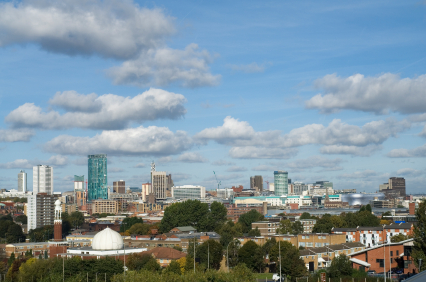
Birmingham was the powerhouse of the Industrial Revolution in England, earning it the nickname ‘the workshop of the world’ or ‘the city of a thousand trades’.
Although Birmingham’s industrial importance has declined, it has developed into a national commercial centre.
Birmingham is a national hub for conferences, retail and events, as well as an established high-tech research and development sector, supported by its three universities. It is the fourth-most visited city by foreign visitors in the UK, has the second-largest city economy, and is often referred to as the ‘Second City’. However, this title is contested with its North West counterpart.
In 2018, Birmingham was ranked as the 50th-most ‘liveable’ city in the world, according to the Mercer Index of worldwide standards of living.
Economy
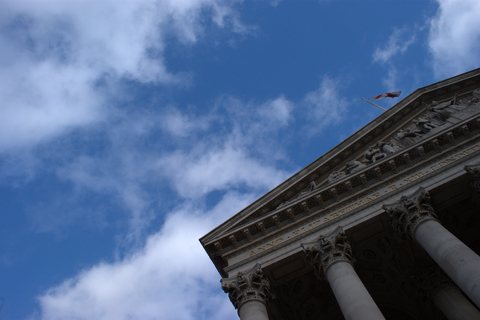
‘Locate in Birmingham’ states that Birmingham city centre is the region’s major cluster with around 600 professional and financial sector firms and a driver of sector activity throughout the region. The city has 200 law firms, boasts a wealth of highly talented banking specialists, many top accountants, 50 major property services companies, and one of Europe’s largest insurance markets.
Two of Britain’s largest banks were founded in Birmingham – Lloyds Bank in 1765 and the Midland Bank in 1836.
Tourism is an important part of the local economy. With major facilities such as the International Convention Centre and National Exhibition Centre (NEC), the Birmingham area accounts for 42 per cent of the UK exhibition and conference trade.
The city’s three Universities, Aston University, University of Birmingham and Birmingham City University and two University colleges have over 65,000 students and employ around 15,000 staff, contributing to the city’s economy as well as its research and innovation base.
The city is the largest centre in the UK for public-sector employment and, in September 2017, the government signed a 25-year lease for nearly 250,000 square feet at Arena Central, which will be the new Midlands regional hub of Her Majesty’s Revenue and Customs (HMRC).
The government has proposed a new High-Speed rail network called ‘HS2’, which would increase the capacity and efficiency of the UK rail system for both passenger and freight transport. The proposals were that the West Midlands would become a major hub and interchange for the whole network.
Independent research carried out in 2013 predicted that with a fully operational HS2, the West Midlands would see:
- 50,000 new jobs (25,000 of which would be in Birmingham and Solihull).
- An average gross value added (GVA) increase of £690 per worker.
- A £4 billion increase in economic output for the region per year.
Office Space to Rent in Birmingham
Grade A headline office rents have seen strong growth in the few years preceding 2023, representing an 8 per cent increase from Q3 2019 to the end of September 2022, when rents reached £40 per square foot for prime office space in Birmingham city centre.
This has been driven by a ‘flight to quality’ with tenants showing an increased appetite for high-quality space.
The take-up from Q3 2021 to Q3 2022 totalled just over 635,000 square feet, which represented a 21 per cent increase on the same period 12 months prior.
In 2023, Grade A office space in Birmingham’s central business district is expected to achieve between £40 and £41 per square foot and between £25 and £26 per square foot for second-hand space.
In Digbeth, prime office space is expected to reach between £30 and £31 per square foot, with Grade B space achieving between £18 and £19 per square foot.
In Birmingham’s Eastside, Grade A space is expected to reach between £26 and £27 per square foot, with Grade B office space achieving between £18 and £19 per square foot.
Grade A office space in Westside is expected to achieve between £27 and £28 per square foot, with second-hand space achieving between £18 and £19 per square foot.
In Q1 2024, it was reported that office space take-up in Birmingham showed marginal Y-O-Y growth in 2023, with a total of 703,000 square feet.
2023 was the first year that total take-up volumes had exceeded 700,000 square feet since 2019, and the Q4 figure saw a substantial increase Y-O-Y at 240,000 square feet – a 14 per cent increase compared to the previous year.
This increase also meant that the Q4 5-year average witnessed an impressive surge of 54 per cent, which local agent Savills stated represented sustained momentum in the market.
In 2024, headline office rents were at £42 per square foot, and there was an expectation that this would rise to at least £43 per square foot by the end of 2024.
Forecasts indicated that prime office rents in Birmingham would reach £48 per square foot by 2027.
In August 2024, it was announced that Global Bank School (GBS) had signed a 15-year lease for 69,000 square feet of office space at 1 Brindley Place. The building would be the education provider’s third base in Birmingham, adding to those in Digbeth and Smallbrook Queensway.
The deal at 1 Brindley Place was Birmingham’s largest office letting deal in over a decade.
In July 2025, it was announced that global commercial real estate consultancy CBRE would move its 150+ team to its new 16,000-square-foot office space at Three Chamberlain Square within the Paradise scheme in January 2026.
CBRE has committed to decarbonising its operations by 2040, which influenced its choice of the sustainable Three Chamberlain Square, which has achieved BREEAM Outstanding and NABERS 5* ratings.
The 189,000-square-foot building has been developed by MEPC Limited, in partnership with Birmingham City Council, and funded by Federated Hermes Limited. The 17-acre Paradise scheme will boast eight flagship buildings offering offices, shops, bars, restaurants, cafes, a hotel and The Octagon, Birmingham’s tallest building and the world’s first octagonal residential tower.
CBRE had occupied 55 Temple Row since 2014.
Also in July 2025, it was announced that One Colmore Row in Birmingham city centre had reached full occupancy following a deal with Crowe LLP.
Acting on behalf of its Danish pension fund client, Britannia Invest A/S, asset manager Catella APAM leased the eighth floor, comprising 4,169 square feet, to the audit, tax, advisory, and risk firm.
Crowe secured a tenant break option at year five.
In December 2025, it was reported that Birmingham’s Q3 take-up totalled 207,000 square feet, which represented a 37 per cent increase on Q2.
This was boosted by the quarter’s two largest deals – accountancy firm Forvis Mazars LLP renting 22,648 square feet at Three Chamberlain Square and law firm Squire Patton Boggs taking 22,231 square feet at 19 Cornwall Street.
Prime office rents continue to rise, reaching £46.50 per square foot. This was achieved with the aforementioned Forvis Mazars LLP deal at Three Chamberlain Square.
This rental growth followed competition for recently completed schemes and Birmingham’s limited Grade A availability. At the end of Q3, Grade A vacancy stood at 1.9 per cent.
Q4 was Birmingham’s strongest since 2017, reaching 288,018 square feet, representing a 110 per cent increase on Q4 2024 and 85 per cent above the five-year Q4 average.
Overall take-up in Birmingham in 2025 was 703,430 square feet.
There were 100 office leasing transactions completed in 2025, which was 3 per cent more than in 2024 and 7 per cent above the five-year average. Ten of the lettings in 2025 were over 20,000 square feet.
The European Flex Market Update 2025, published by CBRE, reported that 4 per cent of Birmingham’s total office stock, or 700,000 square feet, was dedicated to flex space.
However, in Manchester, flex space accounts for 6 per cent of total stock, and in London, 12 per cent.
The report stated that due to Birmingham’s occupancy rates being at a historically high 84 per cent, combined with the growing appetite for flex space, particularly custom managed offices, Birmingham needs more flexible office space if it is to accommodate growing demand.
Overall take-up in Birmingham in 2025 was 703,430 square feet.
There were 100 office leasing transactions completed in 2025, which was 3 per cent more than in 2024 and 7 per cent above the five-year average. Ten of the lettings in 2025 were over 20,000 square feet.
Take-up in Birmingham through office lettings during Q1 2026 totalled 106,724 square feet.
Grade A and Prime take-up totalled 80,274 square feet across seven transactions, accounting for 75 per cent of the city’s take-up and reflecting occupiers’ flight to quality.
Take-up in Q2 2026 reached 44,553 square feet, bringing the year-to-date total to 151,277 square feet, which was 19 per cent below the same period in 2025.
Overall vacancy rate was 9.7 per cent at the end of Q2; however, Prime and Grade A vacancy stood at 4.5 per cent.
There are 21 flex space providers in Birmingham, including relative newcomers to the city, Cubo and The Boutique Workplace Company.
These offer a range of flexible business space options that act as agile alternatives to traditionally leased offices. They offer private serviced offices, managed office suites and floors, fitted office space and coworking spaces across 46 buildings in Birmingham.
Profiles of all Birmingham flexible space operators are available in this directory.
Transport
Due to its inland central location, Birmingham is a major transport hub on the motorway and rail networks. The city is served by several major motorways, including the best-known motorway junction in the UK: Spaghetti Junction.
The nearest airport is Birmingham Airport (BHX), located in the Borough of Solihull to the east of the city. Passenger throughput in 2024/25 was 13 million, ranking it the 7th busiest airport in the UK.
Local public transportation is available by bus, local train, and tram. The city’s main railway station, Birmingham New Street, is at the centre of the national railway network. Birmingham Snow Hill station is another major railway station in the city centre, serving as a terminus for the Midland Metro, which operates between the station and Wolverhampton, as well as the nearby towns of Bilston, West Bromwich, and Wednesbury. Birmingham has a large rail-based park-and-ride network that supplies the city centre.
The travel time between Birmingham and London is approximately 1 hour and 25 minutes by train.
The UK’s railways carry 1.25 billion passenger journeys per annum, and with increasing levels of rail freight, capacity is almost at its limit. The government was proposing to increase capacity and efficiency through a new High-Speed Rail Network. HS2 would reduce Birmingham to London journey times to under 50 minutes.
The majority of the HS2 project was planned to be completed by 2033; however, this was delayed following a programme reset in 2025, with no new completion date announced
Landmarks and Tourism
Birmingham is home to two of the country’s oldest professional football teams: Aston Villa, who play at Villa Park, and Birmingham City, who play at St Andrew’s.
Six-time County Championship winners Warwickshire County Cricket Club play at Edgbaston Cricket Ground, which also hosts test cricket and one-day internationals.
Two major developments have regenerated two parts of the city in recent years. Brindleyplace is a major canalside development featuring restaurants, office buildings, and the National Sea Life Centre. The other is the Bullring Shopping Centre, the twelfth-largest in Europe, covering over 23 acres. The Mailbox, a canalside development, features designer stores, offices, and apartments.
The National Indoor Arena is one of the busiest large-scale sporting and entertainment venues in Europe.
The nightlife in Birmingham is concentrated mainly along Broad Street and into Brindleyplace. There are also a number of late-night bars in the Irish Quarter.
Our office space search, advisory and acquisition services are FREE, always. Our Birmingham office space brokers and agents are globally regulated by the Royal Institution of Chartered Surveyors (RICS), ensuring the highest standards of commercial property advice and service at all times.

The Office Providers is Regulated by the RICS