
A guide to serviced offices, furnished, fitted and managed offices and office space for rent in Manama, as well as general information that may be useful if you are thinking of renting office space in Manama.
For further offices information or to search for office space for rent in Manama just click. Or contact us for any other office space query.
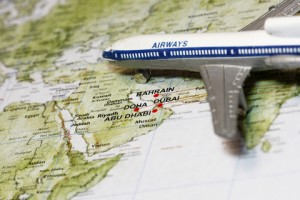
Bahraini capital
Manama is the capital and largest city in the independent island state of Bahrain. It was estimated that over 7000,000 people were living across the city in 2025. There are almost three dozen islands comprising the Bahraini Archipelago, with the capital sitting at the northern tip of what is by far the largest island.
The areas around modern-day Manama are believed to have been inhabited for tens of thousands of years and are thought to have formed part of the Dilmun civilisation during the period of Mesopotamian prominence in the region. Since that time, the city and the islands have generally been subject to the rule of whichever empire carries the most weight in the Gulf region at a particular time.
Islamic conversion
Islam had risen to prominence as the most popular religion in the Arab world from the seventh century onwards, but it took more than two centuries for Bahrain to be converted to the faith. A brand of Islam that would seem very unusual to most of us today was eventually brought across to Bahrain at the beginning of the tenth century by the Qarmatians.
The rule of the Qarmatians in Manama was to last less than a century, during which time they sent armies to the great Islamic holy city of Mecca, resulting in widespread destruction and the theft of the very much revered ‘Black Stone’. The stone was later returned in less-than-perfect condition, and towards the end of the tenth century, the Qarmatians were defeated in battle by the more northerly Abbasid caliphate.
The Portuguese and the Persians
The Bahrain islands and their capital city were to change hands several times over the next few centuries, with powerful tribes coming from central Arabia and Oman, among other places. From the 16th century onwards, the seafaring European nations would have an influence on the region as a whole and on Bahrain in particular. The Portuguese were the first to become fully embroiled in region-wide conflict and politics, falling out of favour with leading Sunnis and Shias alike.
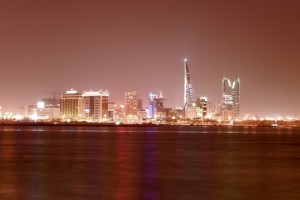
Persian influence over much of the Gulf and the islands of Bahrain would then persist for roughly two centuries after the Portuguese were initially ousted in the early 1600s, with various local tribes again jockeying for position in Manama. Descendants of the Al Bin Ali tribe ultimately gained the greatest prominence as Persian ties were cut and Bahrain was increasingly settled by families from elsewhere in the region, primarily from nearby Qatar.
Al Khalifa and the British
The ruling family of Bahrain has been the Al Khalifa since the late 18th century. The strength of their control on the country as a whole and on Manama as a city has varied considerably during that time, however. The British were invited to and provided protection for the family and the islands as their power and prestige within the Gulf increased dramatically. By the 19th century, British forces were in charge across great swathes of the Middle East, and Bahrain was essentially colonised.
As with other parts of the region, Bahrain became an area of ever greater interest to colonial powers in the wake of oil discoveries across parts of the main island. The discovery at Jebel Dukhan (Well Number One) in 1932 transformed the economic landscape of Bahrain and the entire region.
Oil revenues have helped draw people to Manama and fund its development, with much of the national economy based on or linked to the sale of fossil fuels in the decades since the discovery.
Economy and architecture
The economy of Manama owes a great deal to global demand for oil and its own relative abundance of this valuable commodity. However, there have been expansive efforts, particularly in recent years, to diversify the Manamanian economy and to encourage development in a variety of other industry sectors. The areas that have seen the sharpest growth of late have been banking and finance, with Manama counted as an important centre for an Islam-friendly version of the industry across the Middle East, alongside others like Dubai and Kuwait City.
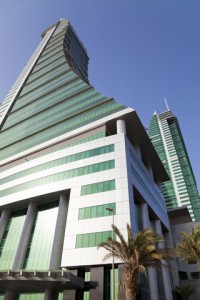
Manama’s skyline is now punctuated with some of the most extravagant and eye-catching towers in the Gulf, with the likes of the Bahrain World Trade Centre and Almoayyed Tower reaching hundreds of feet into the air. The central business district is the base for much of the country’s economic activity, including business operations and various strands of the tourism and retail sectors. Several hugely ambitious development schemes are also in the pipeline as efforts to make Manama a more globally significant city are stepped up.
Oxford Economics reported in 2025 that Bahrain’s GDP was forecast at 2.1 per cent for 2025, with growing momentum in the non-oil sector.
Office space to rent in Manama
In 2013, when we first published this guide, there were hundreds of thousands of square feet of office space available for rent in Manama, and new stock was consistently being added to the city’s overall supply. Demand for office space in Bahrain’s capital was being spurred by a steady influx of new workers across various fields and by the city’s status as the centre of Bahrain’s economic and administrative operations.
However, according to a 2012 report by commercial real estate analyst Knight Frank, demand for Manama office space tailed off in the wake of the global financial crisis, and there was something of an oversupply across the city. With new office blocks still being added to the skyline at the time, tenants and prospective tenants were realising the strength of their position and negotiating more favourable arrangements with landlords in terms of headline rents and incentives.
During 2025, CBRE reported that prime office rental rates in Manama and across Bahrain had stabilised, following a period of consistent decline since 2022, with rates reduced by over 10 per cent during that period.
Limited demand by large occupiers, together with a growing stock, had led to overall rental rates stagnating.
In the years between 2022 and 2025, leasing activity in Bahrain was driven by existing occupiers looking to upgrade their space, access to amenities, and the terms of their leases.
It was also observed that buildings offering co-working spaces and other forms of flexible business space had experienced increased demand.
Like many office markets globally, the flexible office space and workspace sector in Manama and Bahrain has grown in popularity.
This sector offers agile alternatives to traditionally leased office space, with international providers and national operators alike offering solutions, including flexible private serviced offices and fitted, furnished and managed offices – an opening in 2025 included space at Seef Mall by an international office provider.
The solutions are usually held under flexible short-term contracts, with options to upsize or downsize floorspace mid-term in line with changing business needs. They also offer all-inclusive pricing, so the office rent covers overheads such as utilities, cleaning, furnishings, car parking, reception services and other items that would be managed and paid for separately if renting office space in the conventional manner.
CBRE conducted a poll of over 250 Bahraini respondents in 2025 on hybrid working trends and found that only 25 per cent were currently offered a hybrid working option by their employers. This suggested a prevailing cultural expectation of continued full-time, in-person office attendance.
Transport
As with seemingly everything else that goes on in Manama and many of the Gulf states, the scale of certain transport projects in the pipeline is almost unbelievable. A causeway already links Manama directly to the Arabian mainland to the west, and plans are in place to establish similar road networks that would make neighbouring Qatar directly accessible from Bahrain by car, and vice versa.
Plans for the Qatar Bahrain Causeway, also known as the Qatar Bahrain Friendship Bridge, had been in place since 2008, but had stalled several times. However, they recommenced in 2023 following a meeting between Bahrain’s King Hamad bin Isa al-Khalifa and Qatar’s Prime Minister Sheikh Mohammed bin Abdulrahman al-Thani.
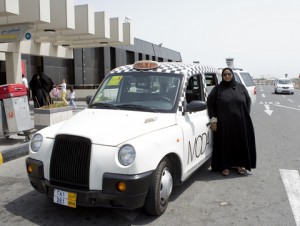
In general, the main way to get around in Manama is by car or taxi, and congestion is a real concern, as in many other cities worldwide. Buses run throughout the city, linking the capital with surrounding towns and nearby cities like Muharraq.
Bahrain International Airport, located on Muharraq Island, is a regional air traffic hub and offers links to a range of international locations.
Established in 1927, it is the Persian Gulf’s oldest airport and today serves as the hub for the national flag carrier, Gulf Air.
It was reported in 2026 that it achieved its strongest annual performance to date in 2025, handling 9.74 million passengers, representing a 4.2 per cent increase over 2024.
Tourism and sport
Bahrain is among the most popular tourist destinations in the Middle East, partly due to its relatively relaxed restrictions on alcohol consumption.
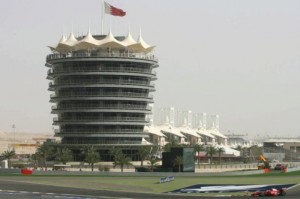
Football is the most popular sport in Manama, and there was clamour among Bahrainis for tickets to Qatar World Cup matches when they went on sale prior to the tournament in 2022. Beyond football, sports such as basketball and volleyball tend to take place indoors, given the often sweltering temperatures, with the exception of motorsport, as the Formula 1 World Championship has included a Bahraini leg since 2004, usually held early in the season.
The race at the Bahrain International Circuit in April 2004 was, in fact, the first Formula One Grand Prix to be held in the Middle East.
The 2026 Bahrain Grand Prix, scheduled for 12 April, was cancelled, along with other fixtures in the region, due to the conflict in Iran that began in March.
We conduct a free office space search, and our advisory and acquisition services are always free. Our Manama office space brokers and agents are globally regulated by the Royal Institution of Chartered Surveyors (RICS), ensuring the highest standards of commercial property advice and service at all times. We look forward to helping you find the best office space for rent for your business.

The Office Providers is Regulated by the Royal Institution of Chartered Surveyors (RICS)