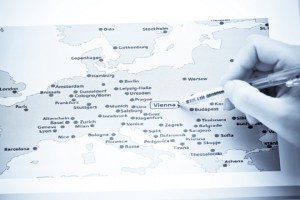
[Updated Oct 2020] For further offices information or to search the office space for rent database just click. Or contact us for any other query.
A guide to serviced offices and office space to rent in Vienna as well as general information that may be useful if you are thinking of renting office space in Vienna.
History & Geography
Few cities in Europe can begin to compare in beauty and heritage to Austria’s famous capital of Vienna. Located in northeastern Austria at the easternmost extension of the Alps, the city lies close to the border of the Czech Republic, Slovakia and Hungary, and south of the storied Danube River. Vienna has been a settlement since approximately 500 BC when it was settled by the Celts. Eventually, it became a Roman fortress called Vindobona, its purpose to keep the marauding German tribes at bay. During the middle ages, the city became the home of the powerful Habsburg dynasty and eventually the capital of the Holy Roman Empire. It was during these times that the city became known for being a centre of art, culture and fine cuisine – a reputation it enjoys to this day. In the 16th and 17th centuries, the Vienna was under constant threat from the Ottoman Empire, however, this was finally ended in the Battle of Vienna in 1683, which confirmed the growing power of the Habsburgs. In 1804 Vienna became the capital of the Austrian Empire and continued to play its role as one of the most important cities on the continent. It hosted the Congress of Vienna in 1814 and became known as a centre of classical music. After WWI and the dissolution of the Austro-Hungarian Empire, Vienna became the capital of the new Austrian Republic. During WWII the city was extensively damaged by both German and Russian artillery as well as Allied bombing. After the war Vienna was occupied by Russia, France, Britain and the US and became a hotbed of Cold War espionage. The Russians withdrew from the city in 1955 after Austria committed to total neutrality in the Austrian State Treaty. The treaty signalled Vienna’s rebirth and extensive reconstruction occurred in the city. Vienna has since continued in its role as one of Europe’s most important and sophisticated capitals.
Economy
Vienna is Austria’s most important economic centre and generates 28 percent of the nation’s GDP and employs approximately one-quarter of its workforce. The banking, insurance and manufacturing sectors are large in Vienna, though in 2010 more office space was rented by the service sector than any other in the city. Hosting corporate conventions and congresses is also an important part of the city’s economy, as is tourism. The city has three congress centres, advanced infrastructure and a host of interpreters and travel agents. Vienna is ranked fourth best city to host a convention after London, Paris and Madrid by the International Congress and Convention Association.
Tourism & Culture
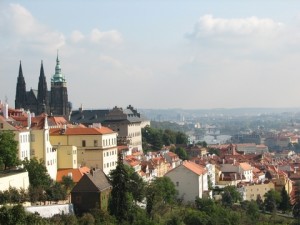
Vienna is famous for its culture, including music, art and architecture. This being the case, it is unsurprising that the city has become a popular tourist attraction in itself. It is the city’s physical attributes that make it one of the most interesting European metropolises to wander in. Vienna’s imperial palaces, the Hofburg, Riesenrad and Schonbrunn are world-renowned, and the Schonbrunn is home to the world’s oldest zoo. Among Vienna’s most popular tourist attractions ins the Hundertwasserhaus, which has some of the most unique architecture in Europe. Visitors in search of more culture will be impressed by the Burgtheater, Wiener Staatsoper and the world-famous Lipizzaner horses at the Spanische Hofreitschule. And for those lucky enough to secure a ticket, the Vienna Boys Choir is considered one of the best in the world. Vienna has over 100 art museums which see eight million visitors a year, many of which are located in the city’s museum quarter. History is everywhere in Vienna, and tourists regularly visit Beethoven’s grave at Zentralfriedhof cemetery as well as Mozart’s memorial at the Habsburg Gardens. Vienna is also known as the last European city to still host grand balls in the style of the 19th century. The city hosts over 200 balls every year, with the grandest having as many as nine live orchestras.
Food & Drink
The traditional Viennese café is world-famous and the style is extensively imitated around Europe. Vienna is known for producing the finest cakes and deserts in the world, including the famous Apfelstrudel, Palatschinken (sweet pancakes) and Sachertorte. The city is equally well known for its sausages sold from street vendors and of course the Wiener Schnitzel, a cutlet of veal coated in breadcrumbs. Vienna is also one of the few remaining European cities with its own vineyards, which produce some of the best wine in the world, which can be drunk in the small Viennese pubs known as Heurigers.
Transport
Vienna’s transportation system is extensive and efficient. The best way to travel around the city is on the U-Bahn, which has five lines running throughout the city. Running out of Vienna Central Station are train links to all over Europe operated by OBB. The city is served by the Vienna International Airport located approximately 11 miles away from the city in the neighbouring town of Schwechat. Vienna also has extensive motorway links.
Office space to rent in Vienna
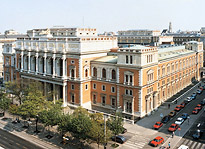
According to CBRE at the end of 2010 Vienna had approximately 10.2 million square metres of office space and a vacancy rate of 5.5 percent, which is expected to remain level until the end of 2011. During 2010 165,000 square meters were either built or refurbished in the city, and during the latter stages of 2010 prime rent in Vienna increased slightly up to EUR 23 per square meter per month. Vienna’s inner districts are where most office space is located and saw the most activity in 2010. Specifically, the central business district, Wienerberg, Erdberg and Unitreu in the north saw significant activity. The Austrian economy experienced a fairly significant slump in 2009 due to the financial crisis but recovered slowly and steadily during 2010. The unemployment rate at the end of 2010 was 4.4 percent, down from 4.9 percent in the previous year.
Our office space search, advisory and acquisition services are FREE, always. We are globally regulated by the Royal Institution of Chartered Surveyors (RICS) ensuring the highest standards of commercial property search advice and service at all times.