
A guide to serviced offices and office space for rent in Cambridge, as well as general information that may be useful if you are thinking of renting office space in the city and the surrounding areas.
For further offices information or to search office space for rent in Cambridge just click. Or contact us for any other query.
History & Geography
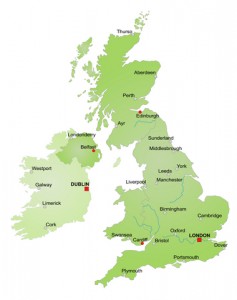
One of the most beautiful cities in England, Cambridge is located in the east of the country, south of the Fens. Running through Cambridge is the River Cam, from where the city derives its name. Cambridge started life as a Roman fortified settlement in AD 40, built to control the river and the surrounding countryside. After the Romans left Britain, the Saxons took control of the area, and the city grew from its good trading connections across the Fens. However, by the 7th century, the town had ceased growing and had diminished in importance. However, the arrival of the Vikings in 875 and the establishment of the Danelaw changed the fortunes of the area. Trade resumed in strength, and as Cambridge’s population grew, so too did its importance. By the time the Vikings had left and England was being invaded by the Normans in 1066, Cambridge was an important town. The new king of England, William the Conqueror, built a castle in Cambridge on the strategically important Castle Hill in 1068, further enhancing the importance of the city. Cambridge’s famous university was founded in 1209 by students fleeing from irate townspeople in the city of Oxford. Peterhouse, the university’s oldest college, was founded in 1284, and King’s College Chapel was begun by King Henry VI in 1446 and finished by King Henry VIII in 1515. The renowned Cambridge University Press was granted its license in 1534. In the subsequent centuries, the university grew rapidly, and the city along with it. Addenbrooke’s Hospital was founded in 1766, and Cambridge train station was built in 1845. In the early 20th century, the city grew significantly when numerous housing estates were built. During WWII, the city escaped bomb damage and served as an evacuation centre. Today, Cambridge is a thriving city, still famous for its prestigious university, but with many separate industries and attractions.
Economy
In comparison with the rest of the country, Cambridge has a much higher proportion of people in skilled professional jobs than manual workers. The population of the city also has a much higher proportion of workers with a higher education qualification, such as an MA or PhD. While education and the service industries surrounding it are a bulwark of the Cambridge economy, the city has also become known for its eminence in the high-tech industry, so much so that it is sometimes referred to as Silicon Fen. Software, electronics and biotechnology, in particular, are very prevalent in the city. Cambridge is known for its business incubators based in various science parks around the city, many of which have connections to or are sponsored by university colleges. A few of the eminent tech companies based in the city are Abcam, CSR, ARM Limited, CamSemi, Huawei, Jagex and Sinclair. The research arm of Microsoft UK is also located in a University of Cambridge technology park. UK aerospace giant Marshall Aerospace is also located in Cambridge on the eastern side of the city, as is Pye Telecommunications and the software company Autonomy Corporation.
AstraZeneca employs 2,000 people at its Discovery Centre (DISC), which is located at the heart of the Cambridge Biomedical Campus.
 Tourism & Culture
Cambridge is a popular destination for visitors eager to walk the grounds of the famous university and soak in the atmosphere and culture of one of England’s most refined and beautiful cities. Queen’s College is perhaps the most picturesque of the colleges, along with Trinity College, both boasting buildings from the 15th century, including the Great Court and Wren Library. Perhaps foremost among the most popular activities in Cambridge for visitors is taking a punt on the River Cam, especially during the summer months. The city is also famous for its Midsummer Fair, which dates from 1211. The Cambridge Beer Festival, the second largest of its kind in the UK, is also a big draw and usually sees over 90,000 pints of beer served. Music lovers flock to the Cambridge Folk Festival, one of the largest folk festivals in the country, held in Cherry Hinton Hall on the outskirts of the city. Cambridge also has a long tradition of theatre, and the Cambridge Shakespeare Festival, an eight-week open-air performance series, is always a popular event. The Cambridge Corn Exchange is the city’s largest theatre and runs performances year-round, as well as hosting music events, tea parties and motor shows.
Transportation
Cambridge is one of the UK’s 11 ‘Cycling Cities’ with cycling being a very popular form of transport due to the flat landscape and the low congestion of the roads. A full 25 per cent of residents cycle to work, and Cambridge has an efficient system of bike paths. The city also has several bus services and five Park and Ride sites which operate all week. Cambridge is served by Cambridge railway station, which has direct links to London’s Kings Cross and Liverpool Street Station. The station also has links to Kings Lynn, Ely, Norwich, Leicester and Ipswich.

Office space to rent in Cambridge
In 2013, Cambridge emerged from the Great Recession in better shape than many cities in the UK, though vacancy rates were at a near-record high. Availability in the Cambridge market stood at almost 100,000 square feet, with a vacancy rate of approximately 13 per cent. Much of the available space was outside the city in various technology and science parks, and indeed, the majority of available space is located out of town. Demand for office space in the city centre remained relatively high, especially in the Hills Road area. This being said, it was a renter’s market in 2013, with incentives of up to 12 months of a five-year lease still being normal in the city.
In 2022, named requirements totalled 900,000 sq ft, and virtually all of those companies required laboratory provision. In the same year, the office space take-up figure was 500,000 square feet. The supply-demand mismatch was significantly amplified by the pandemic.
In 2022, prime office rent was quoted at £52.50 per square foot, and the largest deal was the 30,000 square-foot letting to Dassault Aviation at 22 Cambridge Science Park.
In 2023, it was predicted by Cambridge office agents that science-led schemes such as Cambridge Science Park, Granta Park, and Babraham Research Campus would expand to satisfy demand as Cambridge laboratory requirements are almost four times higher than pre-pandemic levels.
Prime office rents continued to rise and were expected to rise above £60 per square foot by 2024 as new schemes completed.
The Brooklands business campus would complete in Q1 2024, and Siemens agreed, in 2022, to rent 27,631 square feet (40 per cent of the scheme) on a 10-year lease.
In November 2025, it was reported that take-up by way of office lettings in the Q1-Q3 period was 319,000 square feet, which was a 44 per cent increase on the same period in the previous year and 22 per cent above the five-year average.
The increase in total take-up was attributed to acquisitions by larger companies, with seven lettings in the period being over 10,000 square feet.
The largest of which was semiconductor company Arm, signing a lease for 96,000 square feet at The Optic in Peterhouse Technology Park. In Q3, the largest deal involved information and communications technology company Huawei signing a lease to rent 21,000 square feet at 22 Cambridge Science Park.
In July 2025, Cambridge leased office market experts Bidwells had reported that the market had experienced its strongest H1 since 2019 with take-up reaching 241,000 square feet, ‘reflecting sustained demand driven by the growth of science and technology occupiers and the city’s continued evolution as a global knowledge hub.’
This was further reinforced by the fact that, at the time, over 75 per cent of office requirements were from science and technology companies, including life sciences, and many occupiers required combined office and laboratory space.
At the halfway point of 2025, the overall vacancy rate stood at 13.1 per cent. However, the Grade A rate was significantly lower and was expected to shrink as the development pipeline slowed.
Only two major speculative office schemes were under construction at the time, Mill Yard and Botanic Place – both being delivered by RailPen, the manager of the £34bn railways pension scheme in the UK.
Mill Yard in the CB1 postcode district, totalling 112,000 square feet, was scheduled for completion in early 2027. Botanic Place on Hills Road, set to deliver 333,000 square feet, was the largest speculative office development to begin in the South East in 2025 and was set for completion by early 2028.
As with other major UK cities, the near-term supply gap would likely continue to place upward pressure on rents. At the end of 2025, prime office headline rent in Cambridge city centre stood at £65 per square foot per annum. However, Cambridge office market experts predict headline rents to reach £70 by 2027, reflecting roughly a doubling over the decade from 2017.
Prime office rent for the out-of-town market was at £48 per square foot at the end of 2025.
In July 2026, it was reported that The Crown Estate had submitted redevelopment plans for Cambridge Business Park as part of an investment into the Greater Cambridge Impact (GCI), an investment vehicle focused on tackling some of the region’s most pressing social and economic challenges.
Some of the proposals included in the plans included a commitment to create up to 1.8 million square feet of office space and research and development space, a new neighbourhood with approximately 500 new homes and circa 60,000 square feet of new retail and leisure space.
10 flex space providers in Cambridge offer flexible office space and workspace solutions to companies seeking agile alternatives to renting office space on traditional leasehold terms.
These solutions include fully serviced private office space on short-term leases with all-inclusive pricing, self-contained managed office solutions, fully fitted offices and corporate coworking desk space membership plans, as examples.
Profiles of all of these providers can be seen in this directory.
Our office space search, advisory and acquisition services are FREE, always. Our Cambridge office space brokers and agents are globally regulated by the Royal Institution of Chartered Surveyors (RICS), ensuring the highest standards of commercial property advice and service at all times.

The Office Providers is Regulated by the RICS