
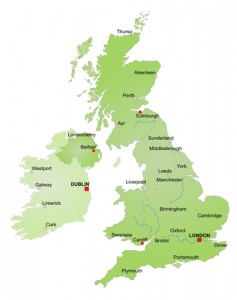
 A guide to serviced offices and office space to rent in Sunderland as well as general information that may be useful if you are thinking of renting office space in Sunderland.
History & Geography
Located on the mouth of the River Wear in North East England, Sunderland lies on a range of hills running along the coast into a valley called the Hylton Gorge. Part of County Durham, the city has served as one of England’s most important ports and trading centres. While the area was inhabited by the Brigante tribe, there have also been reports of a Roman settlement, and the first concrete, historically recorded settlement was the Wearmouth-Jarrow Monastery, built on the north bank of the River Wear in the 7th century. The monastery became a major centre of learning and knowledge, with an extensive library. However, by the 9th century, it had been abandoned due to widespread Viking raids. Meanwhile, settlements were built on the south bank of the Wear, and in the 12th century, a small fishing village known as Soender-land, which eventually evolved into Sunderland, was established.
By the 14th century, the area had become renowned for its ship-making industry, and by the 16th century, large amounts of salt were being made in Sunderland by the process known as salt panning. In the 17th century, Sunderland had developed a brisk trade in coal but was rivalled by nearby Newcastle, another significant coal-trading centre. The city continued to expand and prosper during the 19th century, despite a cholera epidemic which killed approximately 32,000 people. In 1883, Sunderland experienced the Victoria Hall disaster, when 183 children died in a stampede during a variety show. This event led to sweeping changes in the laws governing the management of public venues in the UK.
The beginning of the 20th century saw the city continue to be improved, with an electric tram system installed, the Technical College opened, and the General Hospital built. Due to its industry, Sunderland was extensively bombed during WWII, causing much damage to the city and its industry, already devastated by the Great Depression. A major rebuilding effort restored the city, but in the 1970s and 80s, its shipbuilding and coal-mining industries both declined rapidly. However, as in many cities in Northern England, the 1990s saw a burst of regeneration and the advent of new service-oriented industries, which restored the city’s economy.
Economy
Sunderland’s traditional industries of shipbuilding, glassmaking and coal mining both declined significantly in the mid to late 20th century, and for a time the city was one of the most deprived in the UK. There are still high rates of poverty and crime in some areas of Sunderland, especially Southwick and Marley Potts. The economy has slowly transformed and improved, however. In 1986, the Nissan car factory was opened in the city, creating thousands of jobs, and new service industries also emerged, many of which were headquartered at Doxford International Business Park, built on the outskirts of the city. In 2004 and 2005, the city was included in the shortlist of the top seven cities in the world for the use of information technology. Additionally, the shipyard areas along the River Wear have been extensively redeveloped, featuring a mix of retail and leisure facilities. More developments are planned for the next decade, including the transformation of several industrial estates into public spaces and entertainment areas.
In April 2024, it was announced that the University of Sunderland had signed a lease for approximately 100,000 square feet of office space at Harbour Exchange in Canary Wharf, in one of the largest education lettings in the Docklands ever.
The University of Sunderland in London (UoSiL) was a previous tenant at Canary Wharf, having leased around 9,000 sq ft since 2012, before committing to a new 15-year lease.
At the time of the new deal, over 28,000 students had enrolled at the campus since it opened, on courses including fintech and healthcare.
 Culture
Sunderland has a thriving music scene with many contemporary bands hailing from the city. Sunderland’s underground scene has been considered one of the best in the country and has promoted Field Music, The Golden Virgins and The Futureheads. Sunderland’s Stadium of Light is a major concert venue in the north of England, hosting acts such as Take That, Oasis, Kings of Leon and Status Quo. The city’s Empire Theatre is another popular venue and has hosted acts such as Morrissey, Jane McDonald and The Drifters. The Empire is the largest theatre in the northeast and often includes sizable West End productions. One of the largest events in the city is the Sunderland International Airshow, the largest free airshow in Europe, attended by over one million people every year.
Among the sites around Sunderland, Hylton Castle is probably the most popular, a Gothic-style castle located in the North Hylton area of the city. The nearby beaches of Roker and Seaburn are considered some of the best in the north of England and are popular with visitors. But it is the city’s nightlife that is one of its biggest strengths, and Sunderland has been voted as one of the best nights out in Britain. Many revellers visit ‘the Circuit’, an area of the city which includes several clubs and bars all within a few minutes’ walk of each other.
Transportation
Sunderland station serves the city and has undergone a sizable restoration to make it more aesthetically pleasing. The station serves Newcastle, Hartlepool, Stockton, Middlesbrough, Hexham, and Carlisle. In 2006, a new service was added from Sunderland to London King’s Cross via York. The city itself is served by the Tyne and Wear Metro, which runs five trains per hour, serving nearby Newcastle, South Hylton, and both campuses of the University of Sunderland. Sunderland also has a well-used bus service and, in 1999, opened the Park Lane transport interchange, which became the busiest in the country after Victoria Coach Station in London. Cycling has also become more popular in the city, and there are numerous cycling routes in and around Sunderland.
 Office space to rent in Sunderland
The office market in Sunderland is supply-led and has historically been dependent on public-sector investment. Following the financial crisis of the late 2000s and early 2010s, there was a shortage of Grade A office space in the city centre, with much of the area’s office space to be found in the city’s outlying business and technology parks such as Doxford International. In the early 2010s, work started on the Rainton Bridge Business Park, intended as a rival to Doxford, which will supply an additional 80,000 square feet of office space once completed.
In August 2025, it was reported that, amongst an ongoing shortage of supply of new office space across the whole of the UK, Sunderland was well-placed to attract new business due to its significant share of the UK’s brand-new space following the completion of its Maker & Faber scheme, comprising two buildings offering circa 150,000 square feet of new space.
The buildings were two of only four completed in the UK regions in 2025, offering a total of 350,000 square feet of new office space outside the capital.
Their development followed the highly successful The Beam, which offered 60,000 square feet of Grade A, ESG-considered office space.
Positioned within the £600 million Riverside Sunderland regeneration zone, the Maker & Faber scheme was funded by Legal & General, and the development was managed by Landid. The two buildings overlook the River Wear and Wearmouth Bridge, and offer EPC A and BREEAM ‘Excellent’ office space in one of the UK’s most cost-effective locations.
Office rents at the Maker and Faber Scheme on Plater Way in the SR5 postcode district were being quoted at £24 per square foot in Q2 2026.
There are a number of flexible office providers and workspace operators in Sunderland that offer a range of agile alternatives to leased office space, including private serviced offices, fitted and managed offices and coworking memberships.
These are held on short-term, flexible agreements that allow up- and downsizing of floor space and offer all-inclusive, fixed-cost pricing.
These options are available across Sunderland in locations including Doxford International Business Park, Riverside Road, and Wearfield Enterprise Park East.
We provide a free office space search, and our advisory and acquisition services are always free. Our Sunderland office space brokers and agents are globally regulated by the Royal Institution of Chartered Surveyors (RICS), ensuring the highest standards of commercial property advice and service at all times. We look forward to helping you find the best office space for rent for your business.

The Office Providers are Regulated by the Royal Institution of Chartered Surveyors (RICS)