
A guide to serviced offices and office space for rent in Rome, plus general information that may be useful if you are thinking of renting office space in Rome.
For more office information or to search for office space for rent in Rome, click the button below. Or contact us for any other query.

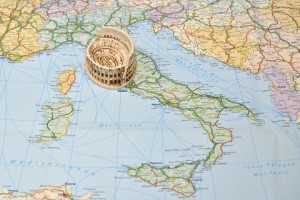
Rome
Rome boasts arguably the most illustrious and renowned history of any city in the world. Sitting on the banks of the Tiber River, midway up along the west coast of the Italian peninsula, it remains among the most prominent cities in Europe.
A Capital City
Rome has been at the very heart of European affairs since it first became the capital of the Roman Kingdom almost two and a half thousand years ago. Since that time it has been the capital successively of the Roman Republic, the Roman Empire, the Papal States and, later, the Kingdom of Italy and the Italian Republic.
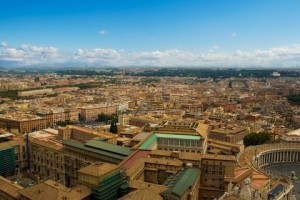
The city wasn’t built in a day, but the Romans came, saw, and conquered most of the known world and left a lasting legacy that can still be felt right across Europe and beyond.
Decline and the Middle Ages
After having been the pre-eminent city in Europe for the better part of a thousand years, Rome’s dominance eventually began to wane, and it was surpassed in various ways by another great ‘Roman’ city to the east, namely Constantinople. Around this time, in the 5th century AD, the role of the Pope was established and given great significance. Rome became the home of the Catholic Church and served as the capital of the Papal States for more than a thousand years from around the 8th century onward.
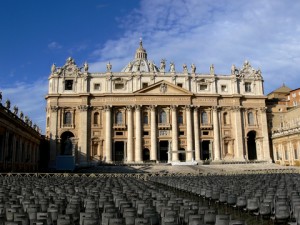
Throughout much of its history, Rome has prided itself on cultural achievement, which has left the city with an astonishing legacy of architecture, painting, sculpture and design, much of which can still be seen around the city and in its array of world-class museums. Papal support aided the achievements of some of the best-known artists ever to have lived, including the likes of Michelangelo and Raphael.
Unification and War
In more recent centuries, Roman affairs became interwoven with those of the continent as a whole, with Napoleon annexing the city into the French Empire at the turn of the 19th century. The Catholic Church reasserted its control over the city after the French were ousted, but its influence was overcome by unitary forces during the 1860s, and Rome eventually became the capital of a unified Italy, with the Pope effectively confined to the Vatican.
Italy and Rome were taken over by the forces of Benito Mussolini in 1922, who allied his then fascist country with that of Adolf Hitler’s Germany. The city sustained considerable damage over the course of the Second World War, though it was not as badly hit as many of its European neighbours.
The Roman Economy
The post-war years in Rome, as in much of the rest of the world, focused on reconstruction and efforts to revive economic activity. Growth rebounded strongly in the Italian capital during this period, as the national economy took off and achieved record rates by the late 1950s and early ’60s. The post-war boom was driven primarily by sharply increased industrial production, especially in steelmaking and large-scale manufacturing.
In recent decades, Rome has established itself as a leading player in the Italian economy, driven largely by service industries and tourism, and is one of the most visited cities in Europe.
The city is a centre for banking, IT, pharmaceutical, and aerospace industries, as well as international law firms.
There were a total of 240,691 active companies registered in Rome in 2024, and the city had a GDP of €168 billion, making up 9 per cent of national GDP, exceeding that of any other city in Italy.
In 2024, Rome had 2,751,747 inhabitants and an unemployment rate of 5.9 per cent.
Office Space to Rent in Rome
Like every other city in Europe, the commercial real estate sector took a hit after the global economic crisis of late 2008. DTZ described the city’s office space stock as having remained stable at roughly 9.8 million square metres in 2010.
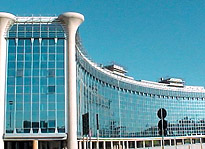
Demand for high-quality office space in Rome increased “slightly” in Q1 2010, the research firm suggests, as an uncertain economic environment across the continent hampered new-building development.
Rome’s office market comprises the following submarkets:
• EUR – This is Rome’s primary modern financial and business district, populated with large corporate offices, multinational companies, and headquarters offices.
• Historic Centre & Centro Storico (Barberini, Repubblica, Piazza di Spagna, Piazza Venezia) – These are popular with companies seeking prestigious business addresses and boutique offices in close proximity to Rome’s iconic landmarks.
• Prati & Parioli: These are upscale commercial and residential areas popular with legal, consulting, and professional service firms.
• Trastevere, Testaccio & Ostiense – These are creative and lively neighbourhoods featuring startup hubs, alternative coworking spaces, and community spots like Libreria Zalib or Zalib – Circolo Arci.
Rome’s office market continued to record positive take-up through office leasing in Q2 2026, bringing the H1 2026 total to circa 59,000 square metres, a 48 per cent increase compared to H1 2025.
Five transactions exceeded 5,000 square metres, and Grade A assets accounted for 45 per cent of total absorption, reflecting sustained demand for best-in-class space, or a flight to quality, in a market where prime supply remained constrained and upward pressure on prime office rents continued.
This meant, at the end of H1 2026, prime rents reached €620 per square metre per year, with further growth anticipated in H2 2026 as constrained prime supply continues to support upward rental pressure.
At the end of H1 2026, the market had 9.81 million square metres of stock, and the overall vacancy rate was 6.5 per cent.
The Rome flex space market comprises office providers and workpsace operators such as Copernico, Pick, Regus, and Spaces, which provide flexible alternatives to leased office space in the form of fitted and managed offices, serviced private offices, and coworking spaces.
These are becoming increasingly popular because of flexible short-term licences and all-inclusive rental fees that cover overheads such as utilities and cleaning.
Tourism and Culture
Few, if any, cities in the world capture the imagination or attract as many visitors as Rome, and with so many iconic buildings, statues, and works of art on public display, it is easy to see why. Rome’s archaeological and artistic legacy is astonishing, and destinations like the Colosseum and the Vatican Museums attract several million visitors each year.

In the modern era, Rome has gained a reputation as one of the most significant centres of the fashion world, although it does not quite keep pace with its northern neighbour, Milan. The city’s cuisine is worth a trip on its own, and the Roman film industry has influenced Hollywood and the rest of the world for decades, giving us some of the best productions and directors of all time, including the great Federico Fellini.
2025 was another record year for tourism in Rome, driven in part by the Vatican’s Jubilee Year, with the Italian capital attracting 22.9 million visitors, a 3.42 per cent increase over the previous record set in 2024.
Transport
Getting to Rome is usually less of a struggle than getting across it, largely because of its well-used airports and much-criticised road networks. Being built on the site of the greatest city of the ancient world presents its own problems, and the road links owe their origins to urban planners with quite different aims in mind. Nonetheless, plenty of routes run in, out, and across the city, though you might need to be patient and authoritative at times.
A two-line local rail system runs across much of the city and helps ease chronic congestion on the main roads.
Also in September 2026, Rome launched a scheme that pays commuters and students to cycle around the city, offering up to €30 a month to those who swap four wheels for two to further reduce traffic.
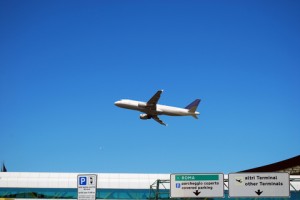
The Fiumicino Airport, officially Leonardo Da Vinci Airport, accommodates more passengers than any other in Italy and is a few miles to the south-east of the city centre.
Rome Fiumicino ‘Leonardo da Vinci’ Airport handled a total of 55.3 million passengers in 2025, an increase of 4 per cent compared to 2024.
Sport
The great sporting obsession in Rome, as in the rest of Italy and much of Europe, is football, and the city boasts two of the best-known and most keenly supported teams in the country. Roma and Lazio have been arch rivals for over a century, and both teams play in the Serie A and at the Olympic Stadium, where the summer games were held back in 1960.
Italy has a proud record of sporting achievement on an international stage, with Rome having hosted both the 1934 and 1990 FIFA World Cup Finals, and Italy has won the competition on four occasions to date, in 1934, 1938, 1982 and 2006.
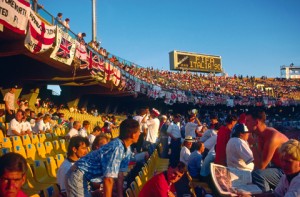
Relatively new sporting introductions in the capital include rugby union, which is becoming increasingly popular in Rome particularly, partly due to Italy’s participation in the Six Nations, the leading European competition of its kind. Cycling, basketball and volleyball all remain popular in Rome as well, but it is football that dominates the sporting landscape right across the Italian peninsula.
We carry out a free office space search, and our advisory and acquisition services are also free, always. Our Rome office space brokers and agents are globally regulated by the Royal Institution of Chartered Surveyors (RICS), ensuring the highest standards of commercial property advice and service at all times. We look forward to helping you find the best office space for rent for your business.

The Office Providers are Regulated by the Royal Institution of Chartered Surveyors (RICS)