
A guide to serviced offices, fitted and managed offices and office space for rent in Liverpool, as well as general information that may be useful if you are thinking of renting office space in the city.
For further offices information or to search office space for rent in Liverpool just click or contact us for any other office space query.
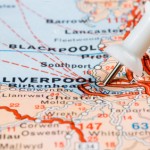
Liverpool and Merseyside
Liverpool itself is just over 800 years old, having been officially founded in 1207 after King John awarded the northern English site a royal charter. The port was not particularly significant during the following 500 years or so, but as British boats began to sail further and further afield, Liverpool gained a more prominent role in both internal and external commerce.
The region’s relatively recent history has been entwined with the breakneck pace of development characteristic of the industrial revolution, in which Liverpool and the northwest, in general, played a major role.
Many of the city’s most identifiable and historically important buildings date from the end of the 19th century, by which time Liverpool was one of the busiest ports in Europe, with more than a third of world trade heading through the mouth of the Mersey.
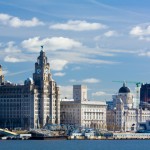
An influx of immigrants from various parts of the world, but principally from Ireland, saw the city’s population explode in the second half of the 19th century, and much of Liverpool’s present identity is based on the idea of a somewhat exotic and diverse cultural heritage.
Liverpool is the principal urban site in the region of Merseyside, which covers around 150 square miles in the northwest of England, just northeast of Wales. There are currently around 1.3 million people living in the area, which is divided into the boroughs of St Helens, Knowsley, Liverpool, Sefton and the Wirral.
Economy
A hundred years or so ago, Liverpool and the huge amount of trade that came through its docks were so central to the British economy that they contributed even more than London to the national coffers. While the city can no longer claim to outdo the capital, it is still among the largest and most significant economic centres in the UK.
Like much of the country and particularly the north of England, the 1980s were lean economic times for Liverpool, but there has been a notable resurgence and, in some ways, a striking process of rejuvenation since the end of the last century. Much of the city’s economy is now based on having a highly competitive service and tourism sector, as well as a strong presence in the media, information technology and life science industries.
Revival
The revival of Liverpool as a vibrant and dynamic English destination has been at least in part based on a reimagining of its expansive maritime heritage, combined with the aspects visitors expect from a modern European city.
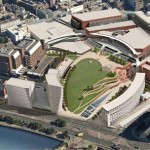
Even a short walk through the city feels like a journey through time, as modern architectural icons stand side by side with some of the most impressive structures from Victorian or Edwardian England.
Office space to rent in Liverpool
Liverpool showed resilience during the Great Recession of 2008; indeed, a joint report from the Professional Liverpool and Liverpool Vision organisations showed that more office space was let in the city’s central business district in 2009 than ever before.
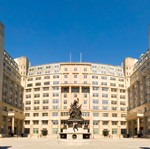
It showed the same strength in the face of macroeconomic adversity during the pandemic just over a decade later.
Office lettings deals totalling 412,000 square feet were completed in 2021 in the Liverpool City Region, up 46 per cent from the previous year.
261,179 square feet of these deals took place in Liverpool city centre, with the largest being the acquisition of 20,020 square feet at 90 Duke Street by the Department for Work and Pensions (DWP).
In 2022, office take-up in Liverpool totalled 510,552 square feet, and the city recorded the highest fourth-quarter take-up since 2019. The 189,601 square feet of space transacted in Q4 was 45 per cent above the ten-year average.
Take-up was not at the pre-pandemic levels of around 600,000 square feet seen in 2018 and 2019, but activity was relatively high given the tough macroeconomic conditions.
In 2023, prime rents were up 16 per cent year-on-year to £25.50 per square foot.
Also in 2023, the development of 109,000 square feet of office space was due to start at Exchange Station, No. 1 St Paul’s Square and Princes Dock.
In 2023, the Liverpool Office Agents Forum (LOAF) reported total take-up of 283,799 square feet by leasing deals. In 2024, this total grew by 12.5 per cent to 318,479 square feet.
In November 2025, it was reported that the city had the lowest level of office stock among regional UK cities.
Take-up in Liverpool in Q3 totalled 146,000 square feet, representing the Liverpool office market’s strongest quarter since 2022 and a level 17 per cent above the 10-year average.
Q3’s total was significantly boosted by the Secretary of State’s 52,051 square feet deal at the Capital Building on Old Hall Street in the traditional core.
Overall vacancy rates in Liverpool, following the quarter, stood at 5.6 per cent – the lowest level of all the ‘Big Nine’ regional cities.
Notably, Grade A vacancy rates following the quarter stood at 0.3 per cent.
In 2026, Fisher German reported that the Liverpool office market finished 2025 in a strong position, with take-up in the second half of the year double that in the first. It was noted, in Q2 2025, that agents in the Liverpool office market had not released the official 2025 total take-up figures.
Prime rents in Liverpool remained at £29.50 per square foot in 2026 for conventional space; however, with minimal new space in the development pipeline due to complete in the short term, combined with ongoing demand, upward pressure on rental levels was expected.
There are 15 flex space providers in Liverpool offering a diverse range of flexible office space and workspace solutions, such as private serviced offices, managed offices, fitted offices, corporate coworking memberships and other forms of short-term rentals that provide an alternative to traditional leased office space.
There are national office providers in Liverpool, such as Bruntwood, Orega and Regus, as well as Liverpool-focused operators such as Baltic Creative and Jordan Street Studios. In total, 15 providers, operators and landlords offer agile alternatives to traditionally leased space across 27 buildings. Profiles of all Liverpool office space providers can be found here.
Transport
The train lines between Liverpool and the other north-western city of Manchester are the oldest commercial rail links to be found anywhere in the world and are still among the most used in the UK.
As well as Manchester trains head in and out of Liverpool’s main Lime Street station from a host of other English cities, including Birmingham, Nottingham, Newcastle-Upon-Tyne and London, with the Pendolino vehicles getting passengers to the capital in just over two hours.
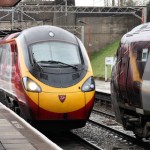
Motorways and major roads link Liverpool with the rest of the country in almost every direction, and where the Irish Sea intervenes, there are all manner of passenger boats and ferries heading in and out of the city’s main harbour.
In terms of air travel, Liverpool is well served by what is now known as John Lennon Airport, named after the legendary local Beatle. 5.6 million passengers were served by the airport in 2025.
Culture
Liverpool’s culture is based on its rich heritage as a hugely significant port and a centre of world trade for several centuries, but it has more recently been defined by its musicians, who are among the most popular of all time. The Beatles changed the face of rock and roll music in the 1960s, and Liverpool has since made considerable contributions to the pop and rock charts.
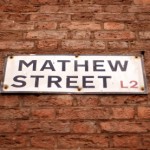
Many of the biggest acts in world music and comedy perform at the M&S Bank Arena, and the Royal Liverpool Philharmonic remains as popular as ever, while there are a number of nationally, if not internationally, renowned museums and art galleries, as well as shops, restaurants and hotels as good as any in the world.
In 2023, Ricky Gervais announced that he would be bringing his Armageddon World Tour to the Arena.
Perhaps summing up the enthusiasm the people of Liverpool have for both their cultural past and present, the docks were awarded UNESCO World Heritage status in 2004, and the city was named the European Capital of Culture in 2008.
In 2021, due to controversy over new developments in the docks, specifically the Bramley-Moore Dock Everton FC stadium project, Liverpool was stripped of its UNESCO World Heritage status following a vote by the UN committee.
Sport
There are few places in the world more passionate about their sports teams than Liverpool, and the red-blue divide between Liverpool FC and Everton FC in many ways defines the character of the city. Both teams play in the English Premier League and attract tens of thousands of die-hard supporters to their home matches each week.
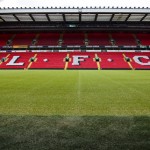
Apart from football, Liverpool and its surrounding areas play host to a number of other world-famous sporting events, including the Grand National horse race and the Open Championship golf tournament.
We carry out a free office space search, and our advisory and acquisition services are also free, always. Our Liverpool office space brokers and agents are globally regulated by the Royal Institution of Chartered Surveyors (RICS), ensuring the highest standards of commercial property advice and service at all times. We look forward to helping you find the best office space for rent for your business.

The Office Providers are Regulated by the Royal Institution of Chartered Surveyors (RICS)