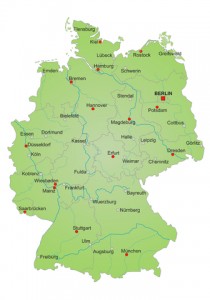
[Updated Oct 2020] A guide to serviced offices and office space for rent in Cologne as well as general information that may be useful if you are thinking of renting office space in Cologne.
For further offices information or to search office space for rent in Cologne just click. Or contact us for any other query.
History & Geography
Germany’ fourth-largest city is located in the Ruhr Valley straddling the famous Rhine River in western Germany. The city is one of the most historically and culturally important in the country and has a rich heritage of learning and the arts. Cologne started life as a Roman settlement in 50 AD dubbed Colonia. The settlement became the capital of Germania Inferior and expanded rapidly to eventually become the most important trade and production centre in the Roman Empire north of the Alps. During the Middle Ages the city continued to grow in importance, using its location on the Rhine to take advantage of the trade routes from east to west. The city became an important member of the powerful Hanseatic League and was made a Free Imperial City of the Holy Roman Empire in 1475. This status gave Cologne the right to manage its own affairs and maintain its own military. The French under Napoleon conquered Cologne in 1798 and the city became a part of the French Republic. It remained so until 1815 when Cologne was incorporated into the Kingdom of Prussia. Throughout the rest of the 19th century, the city continued to grow and envelope smaller surrounding towns. By the 20th century, the city had over half a million inhabitants and had been heavily industrialized. During the war, the city was heavily fortified with bunkers, dugouts and forts surrounding the city and preventing any further expansion. After the war, the fortification was demolished and the surrounding areas turned into parks. During WWII Cologne was heavily bombed and its city centre almost completely destroyed. The city was the site of a major battle between the German and Allied militaries and further destruction ensued. By the end of the war, the population of the city had been reduced by 95 percent. After the war, the city was extensively rebuilt and many of its cultural treasures, such as its distinctive Romanesque churches, were painstakingly reconstructed. The population grew and the city prospered once more. Today Cologne is an important centre of the media industry and a popular location for trade fairs.
Economy
The media and insurance industries are the bulwarks of Cologne’s economy. The city is the largest in the Rhine-Ruhr metropolitan region and home to many corporate headquarters. Among the media companies based in Cologne are Westdeutscher Rundfunk, RTL Television, Deutschland Radio and Brainpool TV. Additionally, there are many prominent publishing houses located in the city, including Taschen, Tandem Verlag and M. Dumont Schauberg. The main insurance companies based in the city include AXA, Generali Deutschland, HDI Gerling and Zurich Financial Services. The largest employer in the city is Ford Europe, and Toyota has also based its motorsport team in the city. Germany’s flagship airline Lufthansa also has its headquarters in Cologne. Traditionally the city has always been a centre of trade and this remains the case today. The Cologne Exhibition Centre (Koelnmesse) hosts over 70 trade fairs and 2,000 conferences every year. It is Germany’s largest organizer of trade fairs and boasts over 284,000 square metres.
 Tourism
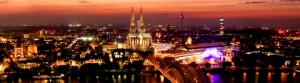
Cologne regularly sees over two million tourists annually, mostly from Europe. In Germany, the city is renowned for the friendliness of its residents and its numerous bars, pubs and restaurants. There are several centres of nightlife in the city, including the student area around Zulpilcher Strasse, the Hohenzollernring, Friesenplatz and Rudolfplatz. Cologne is best known for Carnival, one of the biggest street festivals in Europe when for a few days in November the city is crammed with costumed revellers dancing and drinking. The areas of Zulpicher Strasse and its surroundings, Neumarkt square and Heumarkt are at the centre of the celebrations. Cologne is also famous for its distinctive Kolsch beer, a hoppy, less bitter version of the standard German lager. The city has no lack of sites, including the Cologne Cathedral, its Romanesque churches, medieval houses and medieval city gates. Cologne’s Museum Ludwig has one of the most important art collections in Europe, including an impressive Picasso display, rivalling those in Paris and Barcelona. Of course, the city is also where Eau de Cologne was first made by Italian Johann Maria Farina, and the Farina family still produces the original Eau de Cologne in the city.
Transport
As with most major German cities, Cologne has an excellent transportation system. Most residents of the city use their bikes to get around, and the layout of the streets is very bicycle-friendly. The high-speed train, the ICE, calls at Cologne Central Station and has service across Europe. There is also an extensive light rail system, the U-Bahn, which covers the entire city. The city is served by the Cologne/Bonn airport, Konrad Adenauer Airport, named after the city’s mayor and later German chancellor. The airport is easily reachable from the city by train.
 Office space to rent in Cologne
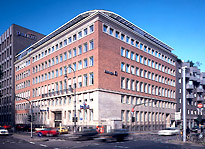
Cologne suffers from a lack of high-quality office space and therefore both demand and rents are fairly high, however currently a number of projects are under construction in the city which could relieve the situation in the future. Despite the high demand and lack of availability, Cologne does have a somewhat high vacancy rate of eight percent due to the number of old and out-dated properties. The most areas with the most expensive rents in Cologne are the city centre and the opposite bank of the Rhine where the maximum rent is EUR 19 per square metre per month. The district of Ehrenfeld also has a large amount of office space and rent ranging from EUR 7 to 12.50 per square metre per month.
Our office space search, advisory and acquisition services are FREE, always. Our Cologne office space brokers and agents are globally regulated by the Royal Institution of Chartered Surveyors (RICS) ensuring the highest standards of commercial property advice and service at all times.