
A guide to serviced offices and office space for rent in Oxford, as well as general information that may be useful if you are thinking of renting office space in the city.
For further offices information or to search office space for rent in Oxford just click. Or contact us for any other office space query.
History & Geography
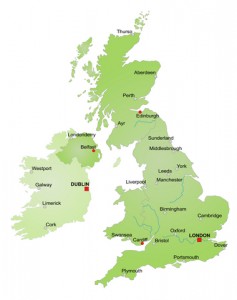
One of England’s most famous cities, Oxford is located in the south of the country, approximately 50 miles north of London. Running through the city are the rivers Cherwell and Thames, which meet each other south of the city centre. Oxford was first settled after the arrival of the Saxons in England and originally bore the name Oxenaforda, meaning ‘Ford of the Oxen’. By the tenth century, the town had been fortified due to sporadic attacks by the Danes and to its location on the sometimes-disputed frontier between Mercia and Wessex. During the Norman invasion in the 11th century, the town was heavily damaged during the fighting; however, it was quickly rebuilt. The Normans then built Oxford Castle in the city to ensure its loyalty. Subsequently, the town continued to prosper but failed to grow significantly. It did, however, start to acquire a reputation as a centre of knowledge and learning. In 1139, Geoffrey of Monmouth wrote the History of the Kings of Britain. His name appeared on six charters in the Oxford area between 1129 and 1151. The city’s famous university was founded in the 12th century, and by the 13th century, its colleges were being formed, including University College, Balliol, and Merton. It was in these colleges that the writings of the Greek philosophers were translated and that scholars strove to reconcile the tenets of Greek philosophy and Christian Theology. During the English Civil War, Charles I had his court in Oxford after being expelled from London, despite the fact that much of the city supported the Parliamentarians. The city was besieged and eventually surrendered to the Parliamentary army under Thomas Fairfax. In 1790, the Oxford Canal was built, connecting the city to Coventry and thereby enhancing trade links between the cities. The 19th century saw the city expand and the construction of Oxford Town Hall. With the advent of the 20th century, the city grew rapidly, and the printing and publishing industries became important. The establishment of the Morris Motor Company car works also changed the nature of the town, swelling the population. A later influx of immigrants has made Oxford extremely cosmopolitan, and it is currently one of the most diverse small cities in the country.
Economy
Oxford has a thriving and fairly diversified economy. Obviously, the university itself, as well as the various research and business projects around it, is a major bulwark of the town’s economy. As one of the most prestigious universities in the world, Oxford routinely attracts visiting professors and academics from all disciplines. Additionally, Oxford has become home to a thriving biotech industry and publishing. The city is also still home to the sizable auto industry, including the manufacturing of vehicle parts. The new Mini is assembled by BMW at Plant Oxford, a former steel plant in Cowley, Oxford. Plant Oxford is the largest employer in Oxfordshire, with 3,700 employees who manufacture approximately 1,000 Minis per day. Oxford also has a fairly large tourist industry, with visitors coming from all over Europe and the world to visit the famous university and see the city’s historic buildings.
Tourism & Culture
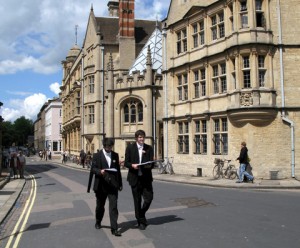
Oxford is perhaps the most famous city in England after London, and this is reflected in the almost seven million visitors it receives each year. As well as the beautiful buildings of the colleges themselves, many tourists visit Carfax Tower and the University Church of St Mary the Virgin, both of which offer stunning views over the city. The city’s historic covered market is also a major draw and dates from the 18th century. The city centre is a major retail hub, centred on Cornmarket Street, Queen Street, St Aldate’s and The High. Like its counterpart, Cambridge, punting is a popular summer activity in Oxford, and the city is also wonderful to walk around, being one of the greenest in England and boasting an array of parks and nature walks within the city itself. Of course, the city also offers a wide range of cultural pursuits, not least of all its museums. Among the most popular and famous are the Ashmolean Museum, the Bodleian Library and the Museum of the History of Science. Art buffs will not want to miss Modern Art Oxford, one of the most respected art museums in the country.
Transportation
Oxford is served by the London Oxford Airport located in Kidlington, approximately five miles north of the city. The city itself has an extensive bus system run by Stagecoach and the Oxford Bus Company. Recently, hybrid buses have been introduced on several routes. The city’s railway station is approximately half a mile from the city centre and is served by many routes to cities such as Manchester and Edinburgh. Passenger boat services are run down the Thames to Abingdon and further by Salters Steamers.
Office space to rent in Oxford
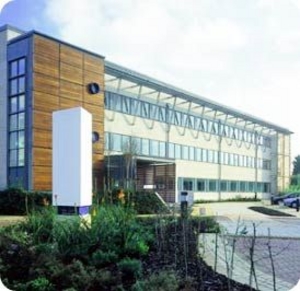
Much of Oxford’s office space is located outside of town in the popular office parks, such as Oxford Business Park and Oxford Technology Park.
The Oxford office market was hit fairly hard by the economic crisis, and annual take-up fell for several years following 2008. During 2012, the headline rent was £21.75 per square foot.
Less than a decade later, the world was hit by another black swan. However, as activity in other office markets in the UK and around the world declined, Oxford saw strong activity, particularly from occupiers involved in vaccinations, i.e. those within the life sciences sector.
Take-up in 2020 increased by 5 per cent above 2019 levels. However, in 2021, take-up increased by a record-breaking 95 per cent to 142,983 square feet.
The majority of those lettings were in the out-of-town science parks, with office space being fashioned for laboratory use.
The demand for lab space had been somewhat detrimental to the office market, as landlords focused on developing lab space rather than office space.
This lack of supply had driven office rents up, with out-of-town rents being between £35 and £40 per square foot, and predictions of city centre rents reaching £60 per square foot.
It was hoped that schemes in the development pipeline, such as Oxford North, would help meet demand and ease upward pressure on rents.
In 2026, it was reported that overall take-up in Oxford via office lettings in 2025 was 192,000 square feet, a 24 per cent decrease on the previous year and 22 per cent below the five-year average.
Savills partly explained the reduction as a decline in the number of larger transactions recorded, with only three lettings over 10,000 square feet in 2025, compared with a five-year average of seven per year.
The largest office deal in Oxford in 2025 was Oxfam’s acquisition of 26,500 square feet of space at Building 2600 ARC Oxford via a sublease.
In the fourth quarter of 2025, the first letting was secured at the Oxford North scheme, with law firm Mishcon de Reya agreeing to rent 3,500 square feet at The Red Hall, Oxford North
It was noted that this deal demonstrated occupiers’ flight to quality in Oxford and the ongoing demand for best-in-class office space. However, it was also noted that The Red Hall, Oxford North, was the only new development that was completed in 2025.
The ‘Pharmaceutical, Medical & Healthcare’ and ‘Technology’ sectors were the most active occupier types across the Oxford market, accounting for 30 per cent and 21 per cent of take-up, respectively.
The laboratory space market was significantly boosted by the Ellison Institute of Technology’s acquisition of the western side of The Oxford Science Park, which represented a landmark transaction for the Oxford market. This deal included the acquisition of the Daubeny Project, comprising three office and laboratory buildings under construction, totalling approximately 450,000 square feet.
The office space element of the deal was not included in the office take-up figures for Oxford, but the deal pushed lab space take-up to around 620,000 square feet, further reinforcing Oxford’s status as a global science cluster.
To further reinforce Oxford’s position as a global science centre, in March 2026, Oxford City Council approved the plans of The Crown Estate, in partnership with Oxford Science Enterprises (OSE), to transform 1 – 2 Magdalen Street into a science and technology hub.
The former Debenhams department store, measuring approximately 100,000 square feet, would be remodelled to deliver several laboratories and dedicated conference and events spaces.
The Crown Estate would invest £125 million into the development of the life sciences hub as part of the organisation’s commitment to invest £1.5 billion in the science, innovation and technology sectors over the next 15 years.
Work on the hub was due to start on the first of 2027, with completion targeted for 2029.
As seen with the Mishcon de Reya deal, demand for best-in-class space remains resilient; however, developers’ challenges continue to constrain city centre supply, creating upward pressure on headline rents.
The current prime rent for the city centre stood at £63.50 per square foot in Q1 2026 — this level was expected to increase as new best-in-class space was set to be delivered in 2027.
Whilst the supply of prime office space in Oxford remains constrained, the overall supply in Q1 2026 stood at 911,000 square feet – an increase of 59 per cent from 2024.
This increase was due to secondary space being returned to the market, much of which was classed as Grade B office space.
As mentioned above, the only brand new space available in Oxford in Q1 2026 was The Red Hall, Oxford North, and following the Mishcon de Reya letting, it had just 29,000 square feet of vacant space remaining.
There are 20 flexible office space providers in Oxford that offer agile alternatives to leased office space, such as private serviced offices, managed office suites and coworking desk space memberships for companies and individuals.
The city hosts international office providers such as Regus as well as homegrown Oxford-focused operators such as One St Aldates. Profiles of all providers in Oxford can be seen in this directory.
Our office space search, advisory and acquisition services are FREE, always. Our Oxford office space brokers and agents are globally regulated by the Royal Institution of Chartered Surveyors (RICS), ensuring the highest standards of commercial property advice and service at all times.

The Office Providers is Regulated by the RICS