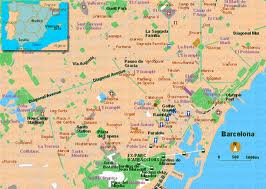
A guide to serviced offices and office space in Barcelona, as well as general information that may be useful if you are thinking of renting office space in the city.
For further office information or to search for office space for rent in Barcelona, just click the button below. Or contact us for any other query.

History & Geography
Barcelona is not only the second-largest city in Spain but arguably the most beautiful and most visited in Europe. The Catalan capital lies on the northeast coast of the Iberian Peninsula on the Mediterranean. The Collserola mountain range surrounds the city, and the Llobregat River lies to the southwest. The Carthaginian leader Hamilcar Barca, father of the legendary general Hannibal, founded Barcelona, and the city still bears his name today. The Romans turned Barcelona into a military camp, but its beautiful location and excellent harbour helped the encampment grow into a thriving city in its own right. Roman grid-style planning is still visible in the layout of the old Gothic Quarter today, and some Roman ruins remain near the city’s museum. After the fall of Rome, the city changed hands several times from the fifth to the eighth centuries, first being occupied by the Visigoths, then the Arabs and finally the Franks. Charlemagne himself created the title Count of Barcelona to rule the city and surrounding regions. As Barcelona increased in power and wealth, it became more and more independent, and its sphere of influence expanded to include Aragon and other cities on the Mediterranean like Sicily and Athens.
In the 15th century, however, the balance of power shifted to Madrid, and trade with the Americas superseded the Mediterranean trade which made Barcelona rich. In the 17th century, Catalonia revolted against Spain, resulting in Barcelona being besieged, eventually captured, and brought under Spanish sway once again. The Napoleonic Wars further ravaged the city and the surrounding area in the 18th century. Barcelona experienced a resurgence, however, and a fortress was built at Montjuic, where the French astronomer Pierre-François Mechain invented the meter measurement.
During the Spanish Civil War in the 1930s, Barcelona fought against Franco, and following his victory, it was savagely suppressed. They banned the Catalan language and traditions. Despite this, following WWII, many immigrants flocked to the city, sparking industrialisation and modernisation. In 1992, Barcelona successfully hosted the Olympic Games, which bolstered the city and region. Today, Barcelona is one of Europe’s most influential and prosperous cities.
Economy
Barcelona is the capital of Catalonia, one of southern Europe’s richest regions, and home to more than 66 per cent of the region’s residents.
In 2025, Barcelona had a GDP of circa €112 billion, with GDP growth of 2.7 per cent.
Manufacturing is a staple of Barcelona’s economy; however, the services sector has recently overtaken it, a trend seen in many major European cities. Other industries important to Barcelona are chemicals, logistics, publishing, telecommunications, pharmaceuticals, electronics, printing and information technology.
Technology- and knowledge-intensive sectors now represent 49.9 per cent of the city’s gross added value (GVA) and have driven a significant share of job creation, with around 90,000 new registrations since 2019.
The city is also a popular destination for trade fairs and international exhibitions. The Fira de Barcelona is the second-largest exhibition hall in Europe, and the Barcelona World Trade Centre is also a popular venue for conventions.
As many people come to Barcelona on business, more flock to the city for pleasure. The tourism industry has become a mainstay of the local economy, generating millions in revenue every year.
 Tourism
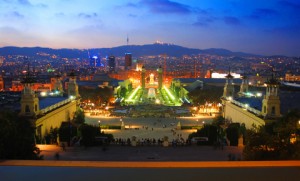
Barcelona is one of the best-loved cities in Europe, visited equally by Europeans and by those from farther abroad. The combination of the city’s ideal climate, stunning architecture, and attractive culture makes it truly unique among Europe’s major cities.
The centre of Barcelona’s old city must be one of the most picturesque old quarters in existence. Known as the Gothic Quarter, the area boasts a host of medieval buildings which can transport visitors back to Barcelona’s past. The city is also famous for its Art Nouveau buildings, as well as the Sagrada Familia church, Gaudí’s incomplete masterpiece. The church is a UNESCO World Heritage Site, as are many other buildings in Barcelona. Though not as grandiose as the Sagrada Familia, the Church of Santa Maria del Mar is also beautiful, as is the Hospital de Sant Pau.
Barcelona’s beach is also a major draw and was named by National Geographic as the best urban beach in the world.
For sports aficionados, no visit to Barcelona is complete without seeing Camp Nou, home to FC Barcelona, perhaps the most famous football team in the world.
Barcelona also hosts several music festivals every year, the most famous being the Sonar Festival in June and the Primavera Sound Festival in late May.
Barcelona city welcomed 16 million visitors in 2025, an increase of 2.9 per cent from 2024.
Transport
Josep Tarradellas Barcelona–El Prat Airport serves Barcelona, located about 11 miles from the city centre. The airport mainly serves domestic and European destinations but also has some flights to Latin America, Asia, and the United States.
The airport served 57,483,036 passengers in 2025, a 4.4 per cent increase compared to 2024.
Barcelona’s main railway station is Barcelona-Sants Station, which is served by high-speed rail links to most major Spanish and French cities.
Barcelona has a fairly efficient public transportation system that includes trams, buses, and the metro.
In 2007, the city introduced the Bicing service, offering bikes which can be hired from one of 100 stations scattered throughout the city.
In 2026, the service was operated via the SMOU app, with over 550 docking stations and a fleet of 5,000 electric bikes and 3,000 traditional bikes.
 Office Space for Rent in Barcelona
The Spanish economy was hit hard by the financial crisis, and the Barcelona office market was still suffering as a result in 2013. Take-up was at the lowest level reported in the last decade, mainly because companies relocated to cheaper space. Barcelona’s vacancy rate was at 12.8 per cent and was predicted to rise above 13 per cent by the end of 2013. Rents in the city centre fell by almost three per cent in 2012.
Barcelona’s office market comprises the following areas or submarkets:
- Eixample – this is a prestigious, centrally located district.
- 22@ / Poblenou – close to the beach and popular with tech startups and scale-ups seeking workspace with strong ESG credentials. In Q2 2026, the 22@ district lead office leasing activity, accounting for close to 30 per cent of take-up in the city.
- Passeig de Gràcia / Center – this district contains prime office space buildings popular with corporations seeking headquarters offices.
Take-up in the Barcelona office market exceeded 176,000 square metres in the first half of 2026, up 12 per cent compared with the same period in 2025.
At the end of H1 overall vacancy stood at 13.5 per cent, although was 4.1 per cent in the CBD just 1.0 per cent for prime and Grade A assets reflecting strong appetite for best-in-class office space meaning centrall located space with with the highest environmental, social and governance (ESG) credentials combied with excellent technology infrastructure.
Prime office rent stood at €31.75 per square metre per month at the end of H1.
Circa 50,000 square metres of floorspace was delivered during H1 2026, however 90 per cent of this was pre-let creating further upward pressure on prime rents.
Delivery of 9,000 square metres was planned over H2 2026, all of which was already committed.
Barcelona has a growing flex space market with office providers and workspace opertors such as Aticco, Cloudworks, Regus, Spaces, Talent Garden, and WeWork offering flexible alternatives to leased office space in the form of private offices, managed and fitted office space and coworking space.
These are available on flexible short-term contracts with all-inclusive rental fees covering overheads such as utilities.
Our office space search, advisory and acquisition services are FREE, always. Our Barcelona office space brokers and agents are globally regulated by the Royal Institution of Chartered Surveyors (RICS), ensuring the highest standards of commercial property advice and service at all times.