
Manchester is the largest city in the North West of England. It is a major regional city, and many will argue that it is the UK’s ‘Second City’. It is known as a ‘Core city’ within the UK government’s ‘Northern Powerhouse’ initiative, designed to empower the North’s economy. In July 2026, Labour Prime Minister Andy Burnham opened Manchester’s office, ‘Number 10 North’, at Heron House on Albert Square in Manchester city centre.

To get a free report that condenses the Manchester Office Space Market to match your requirements, click the button below.
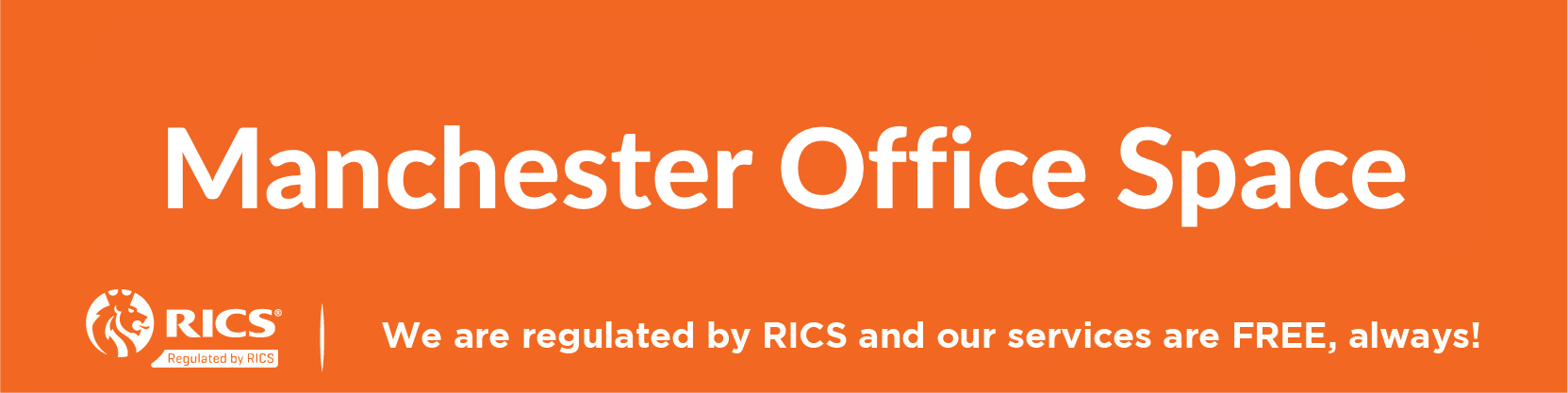
Internationally known for its music, football teams, and scientific achievements, it has both national and international appeal. Manchester city centre has a mature office market, with several areas within the city that are popular office locations. The city also has a healthy office development pipeline, including both existing office areas and brand-new ones.
Several locations and sub-markets exist throughout Greater Manchester; however, this article is focussed on office space in Manchester city centre.
Why is Manchester a popular business location?
Manchester was where the Industrial Revolution began, so it has always had a strong link with commerce. It was also where Mr Rolls met Mr Royce and where major scientific breakthroughs occurred, such as the splitting of the atomic nucleus and Alan Turing’s development of the concept of the first computer.
It has a population of about half a million and several higher education institutions, such as Manchester University, Manchester Metropolitan University and Manchester Business School, so it has a broad, deep talent pool.
It is well connected; the M60 motorway circles around Manchester and links easily to the rest of the UK motorway network.
Holyhead Port is just over 2 hours away and has regular ferry connections to Ireland.
Its international airport is the UK’s 3rd largest, handling circa 30 million passengers per year and serving approximately 200 destinations.
The city centre has 3 mainline train stations that connect with the UK rail network, and connections from Manchester Piccadilly to the capital take just over 2 hours. This will be reduced to 1 hour 20 minutes with the introduction of the HS2 rail network.
Manchester has a strong reputation for arts and sport, with internationally acclaimed artists, musicians, sports stars, and teams.
Several national and international companies have chosen Manchester as their base, or at least have a regional office in the city.
This has created a mature, diverse ecosystem of office space occupiers in the city.
And it continues to grow.
Who are the big office space occupiers that call Manchester home?

Manchester is a well-respected business location and has attracted large office occupiers for many years. Manchester was home to the UK’s tallest office building in the 1960s: the Co-Operative Group’s CIS Tower headquarters.
Today, the Grade-II listed property is clad in solar panels and, upon completion in 2005, became Europe’s largest commercial solar façade. It generates 180,000 kWh of electricity per year, which it feeds back to the National Grid.
One of the largest office occupiers in the city, aside from the aforementioned Co-Operative Group, is the Royal Bank of Scotland. RBS took just over 450,000 square feet of office space at Spinningfields in 2006, kick-starting the 20-acre thriving city centre district we see today.
Other large occupiers include Google, which occupies the Spaces building on Oxford Street known as Peter House.
Professional services firm KPMG occupies 74,000 square feet of office space in St Peter’s Square and was the first occupier of the One St Peter’s Square development, moving in in 2015. They have just over 700 staff in the property.
Autotrader was the first major office space occupier of the First Street development at the southern end of Manchester city centre. They moved 600 staff and signed a 15-year lease on 60,000 square feet when they moved in in 2014.
In 2004, The Bank of New York Mellon chose Manchester as the location for its new Global Delivery Centre (GDC).
Its office at One Piccadilly Gardens opened in 2005 with 50 employees. Over the next 10 years, it grew its headcount to more than 1,200, prompting it to open a second office in Spinningfields in 2008.
Booking.com has large offices in Manchester: two on Fountain Street, one on Deansgate, and one on Quay Street.
In 2018, Booking.com announced it had signed a 12-year lease for 222,000 square feet of office space at the Manchester Goods Yard, part of the St John’s regeneration masterplan on the former Granada Studios site between Spinningfields and Castlefield.
It will become a tech campus for over 1,500 employees and will be the second-largest location outside of its main business base in Amsterdam.
In January 2020, Amazon opened the doors of its new corporate offices at the Hanover Building on Corporation Street in the NOMA district of the city centre. It announced it would create 600 new jobs with the office opening.
Where are the popular office space locations in Manchester?
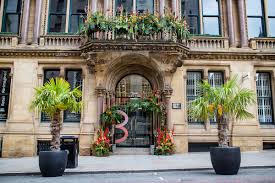
Manchester’s traditional core or central business district is based around the upper half of King Street, which sits between Cross Street and Piccadilly Gardens and encompasses Brown Street, Fountain Street and Spring Gardens. The area includes a range of new Grade A office buildings, as well as refurbished Grade B properties. Both leased and flex space options are available in the Manchester central business district.
One of Manchester’s newer office space districts is NOMA, which is at the northern end of the city centre close to both the Northern Quarter and Victoria Station. The Co-Operative Group leads the area, is the major occupier, and developed the scheme with development partners. The Co-Operative Group has its new headquarters here, named One Angel Square. Both WeWork and Amazon recently signed office space deals here.
St Peters Square is another new office space district, adjoining both the central business district and Oxford Street. It has excellent public transport links, being a major tram intersection, and is just 5 minutes from Oxford Road train station. KPMG was the scheme’s first major tenant in 2015.
The Northern Quarter is a trendy part of the city centre and roughly sits between the ring road and Piccadilly Gardens. The properties in the NQ are mainly disused warehouses, mills, and factories from the early days of the Industrial Revolution. Many have been converted into apartments, restaurants, retail, and office space. BooHoo, an online clothing retailer, has been one of the Northern Quarter’s largest occupiers.
Just across the ring road from the Northern Quarter is Ancoats, which is becoming an extension of the NQ and a district in its own right. Ancoats has several residential developments, and new co-working spaces such as Beehive Lofts offer great office space in converted mill lofts; they are now opening and proving very popular.
The area surrounding Piccadilly Station has become a popular workspace solution over the last 15 years. Certain buildings, such as Bruntwood’s 111 Piccadilly, have been popular for many years; however, Argent’s development of Piccadilly Place in the late 2000s brought a new wave of occupiers, including Barclays, NHS, and Egencia, to the area. New amenities and the excellent transport links keep this location popular. Orega provides serviced offices and co-working spaces at Piccadilly Place, as do other providers.
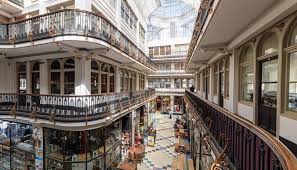
Deansgate is a major arterial road that intersects the city centre. It is a popular retail and leisure street with shops, bars, restaurants, gyms, and cinemas. It offers many office options along its length, including space in the Victorian Barton Arcade, Grade B space above shops, Grade B standalone space, and brand-new standalone Grade A office space such as 125 Deansgate, which opens its doors in April 2020. Flexible workspace provider Spaces has taken all 120,000 square feet and will offer serviced offices and co-working spaces, including hot-desking areas and meeting room hire. 125 Deansgate is located opposite one of Spinningfields’ main entrances.
The 20-acre Spinningfields scheme sits between Deansgate and the River Irwell. After a major regeneration by Allied London, the scheme welcomed thousands of RBS employees when the bank signed for 456,000 square feet in 2006. Since then, many occupiers have rented office space at the scheme, including Deloitte, HSBC, Grant Thornton, and the Guardian Media Group, among others. There is a variety of leasehold and serviced offices available to rent at Spinningfields.
Just across the Quay Street border of Spinningfields sits the old home of Granada Studios, where ITV soap opera Coronation Street was once filmed. Rebranded ‘Old Granada Studios (OGS)’ within the St John’s neighbourhood, the area which includes Enterprise City is Manchester’s newest office space district. Booking.com was the first major tenant to move 1,500 employees into its 220,000 square foot campus in 2020.
Manchester office space market

Manchester city centre enjoyed a strong year of office take-up in 2019 with more than 1.5 million square feet of workspace let across over 250 individual office space deals.
The 2019 take-up figure is 10 per cent above the five-year average of 1.35 million square feet.
Manchester’s total take-up via office lettings in 2025 was 1.14 million square feet, slightly above the five-year average but 80,000 square feet below 2024’s total.
2019 saw a new record office rent of £36.50 per square foot, achieved when JLL acquired the 10th floor at St. Peter’s Square. They took just under 14,000 square feet and signed a 15-year lease. This was the first deal at the property, named Landmark, which offers BREEAM Excellent and Wired Score Platinum-certified office space and the largest floor plates in the city centre.
In Q1 2026, prime office rent in Manchester city centre was £45 per square foot per annum.
The take-up figure includes some noteworthy transactions, including the latest pre-let at Enterprise City at the ‘Old Granada Studios’, where WPP committed to 82,000 square feet at the Globe & Simpson building. And 2 New Bailey Square on the banks of the River Irwell, which attracted Eversheds Sutherland and BLM to 47,500 square feet and 71,000 square feet, respectively.
The flexible workspace market remained active, with Spaces’ acquisition of 121,000 sqft at 125 Deansgate, the largest deal concluded in the city centre last year. This is likely to be a management contract arrangement between the landlord and Spaces; however, details were confidential.
Other flexible office providers committing to workspace in the city include WeWork at Hyphen, taking 51,000 square feet; Huckletree, taking 25,800 square feet at the Express Building in Ancoats; and Regus, taking 26,350 sqft at St James’s Tower.
What sort of office space options are there in Manchester?
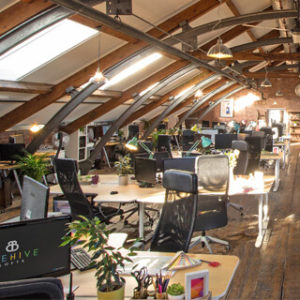
Manchester offers a diverse supply of office space to rent, from loft office space in the Northern Quarter, to beautifully refurbished Grade-B offices across the city, to Grade-A BREEAM Excellent space in Manchester’s traditional core, Spinningfields, St Peter’s Square, and other locations.
Several leasehold options exist where a landlord and tenant enter into a leasehold arrangement. These leases typically run from 3 to 15 years, but often include break options, meaning a tenant can leave early if they serve the appropriate notices at the right time. Landlords can also reclaim the space before the lease ends under certain circumstances.
There are several serviced office space options in Manchester where an occupier enters into a licence agreement with an office provider/operator. The occupier pays a monthly licence fee, which covers rent, service charge, utilities, furniture, cleaning, reception staff costs, and more. The terms are shorter, and contracts are flexible. Licences can usually be drawn up within hours, and occupiers are not bound by onerous lease terms.
Managed office spaces in Manchester are also available. These are bespoke arrangements made between a managed office space provider and a tenant. They allow an occupier to customise their space and brand it as they desire. They can also add services such as reception services, broadband, IT support, and other customisable features. A lease is in place, but it is between the landlord and the managed office provider. This bespoke office space solution offers many advantages, depending on your specific requirements. These options suit companies that need 20+ desks and plan to stay for more than one year.
There are several co-working spaces in Manchester in all office space locations. These include Hot Desks, where a user pays a fee and takes a desk that’s free at that time, plug in, and get to work. These are also known as ‘Floating Desks’. There are also Dedicated Desk options, where you pay a higher fee, and the desk effectively becomes yours (while you are paying).
How much is office rent in Manchester?
The record headline office rent in Manchester city centre for leasehold space was broken in 2019 with JLL paying £36.50 per square foot at Landmark in St Peter’s Square.
Other brand-new Grade A options in the city centre are now likely to achieve headline rents north of £30 psf, and incentives such as rent-free periods and capital assistance will vary by deal.
Second-hand Grade B space varies considerably by location, property, and condition.
Business rates are determined by the Rateable Value (RV) of a property, which is set by the Valuation Office Agency (VOA). The RV is what the VOA determines is the equivalent of one year’s rent. The RV is multiplied by a factor known as the Uniform Business Rate (UBR); this varies every year but is usually around 50 pence. If a property’s RV is £30 per square foot, then business rates will be circa £15 per square foot.
The service charge for an office covers the cost of maintaining the building’s fabric and common areas, so it includes insurance, cleaning, power in the common areas, lift servicing, decorations, security staff costs, the sinking fund for future repairs, and so forth. This varies considerably depending on the building’s format and condition, and which services are included.
For Grade A office space, service charge tends to be around £5 – £7 per square foot.
With flex space options including serviced offices in Manchester, the tenant pays one fee on a monthly basis and this covers rent, business rates and service charge and also other occupancy-related costs like utilities, cleaning, furniture, broadband and so forth.
Serviced office costs in Manchester vary by property and depend on the total number of desks required, current availability, the desired term length, the type of services required, and so on. Serviced offices in Manchester cost around £150 to £450 per desk per month.
Coworking spaces are similar to serviced offices in that the costs are all-inclusive. Coworking costs vary across the city and by building, ranging from £100 to £300 per desk per month.
How do you go about finding and securing office space in Manchester?
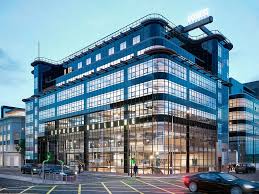
When choosing business space in Manchester, and indeed any location, consider many factors. These can be physical factors such as how much space is required, whether lifts are necessary, what cabling is required, whether car parking is required and so on. You also need to consider the geographical location; does the office space need to be close to public transport, clients, suppliers, and so on?
Many factors come into play, and it is often useful to use an office agent. A Manchester office agent should have excellent local market knowledge and can walk you through various workspace options. You can then run an exercise that breaks down and compares leased and flex space options.
They will arrange tours and viewings and will negotiate on your behalf, liaising between you, the landlord and the landlord’s agent. They will also carry out negotiations on your behalf and will liaise with your solicitor in the drawing up of the lease.
Side note: when taking leased office space, and indeed entering into any form of contract or lease, it is highly recommended to use a solicitor.
A leasehold office agent in Manchester will typically charge a fee equivalent to 10% of the first year’s rent.
Shameless plug alert: If you are unsure where to start your Manchester workspace search, get in touch, and we can talk you through the options in much greater detail, tailored to your requirements. We can further explain the differences between serviced offices, leased offices and other options. We can also arrange tours of flex space options, support your negotiations, and help you secure the space. Our services are free because office providers and operators pay us a fee.
What sort of support is there for businesses in Manchester?

Manchester offers a high level of support for start-ups, SMEs, and other types of enterprises. A good place to start in finding out about support to start is with Manchester City Council and checking out the ‘Business and Investment’ section of their website.
Other institutions that support businesses investing in Manchester include the Business Growth Hub, based at Lee House on Great Bridgewater Street.
Details of Manchester’s inward investment body, MIDAS, can be found on the Invest in Manchester website. This body acts on behalf of the ten Local Authorities of Greater Manchester, works to attract inward investment into the City Region
The North West Fund also provides direction and support for businesses in the North West.
Manchester is a key city in the ‘Northern Powerhouse’ which is defined as the government’s ‘vision for a super-connected, globally-competitive northern economy with a flourishing private sector, a highly-skilled population, and world-renowned civic and business leadership.’ Details of the support provided, which includes networking events, campaigns and marketing, and links to the government, can be found on the Northern Powerhouse website.
Is it easy to recruit staff in Manchester?
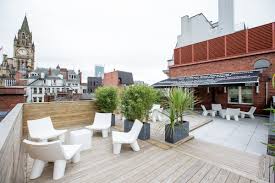
Several universities and further education establishments are in Manchester city centre and throughout Greater Manchester and the North West. Manchester retains its graduates due to its diverse economy and business ecosystem; it has been quoted as retaining 60% of its graduates.
Therefore, it offers a rich pool of well-educated talent to choose from.
It also regularly ranks near the top of UK best-cities-to-live-in lists, so the city’s appeal is strong. Therefore, it is not difficult to convince people to work in Manchester or move from another city to work there.
For these reasons, Manchester has a wide variety of recruitment agencies: some specialise in one or two industries, and others cover many.
Below are the details of some of the agencies that are based in the city:
Digital Gurus, Tootal House, Spring Gardens, Manchester M2 1FB
Hexa Services, Deva Centre, The Cottages, Trinity Way, Manchester M3 7BE
NES Global Talent, Station House, Stamford New Rd, Altrincham WA14 1EP
Bedenoch and Clark, Spring Gardens, Manchester M2 2BY
Morgan Hunt, Acresfield, Exchange St, Manchester M2 7HA
What are the transport links in Manchester like?

Manchester city centre has 4 mainline train stations: Manchester Piccadilly, Manchester Oxford Road, Manchester Piccadilly, and Deansgate.
Greater Manchester has a network of 600 bus routes, and there are over 120 bus stops in Manchester city centre, so it is easy to commute by bus.
A free bus service also operates within the city centre, linking the main thoroughfares with the main commercial districts.
The city centre has ‘Cycle Hubs’ that offer secure bike parking for a monthly fee. Some also have showers and lockers.
There is one at Oxford Road Train Station, and there is one in the basement of City Tower in Piccadilly Gardens.
Several car hire companies based in Manchester offer daily, weekly, and longer hire contracts, and others rent cars by the hour.
Several car parks throughout the city centre are operated by NCP, Q-Park, and local operators.
What’s it like to live in Manchester?
Manchester has a great nightlife, great shopping, a full and diverse calendar of music and sporting events, great restaurants, art galleries and much more. It was once said that Manchester has everything except for a beach, and that feels very true. And even though it doesn’t have a beach, you can hop on the motorway, and you can have the sand between your toes in about an hour.
There are many places to live within easy commuting distance of the city centre. Great suburbs include south Manchester (Didsbury and Chorlton), north Manchester (Whitefield and Prestwich), east Manchester (Ashton), and west Manchester (Salford Quays). All of these are easily commutable to the city centre.
There are also many options for city-centre living. There are apartment schemes dotted all over the city centre and clusters in areas such as the Green Quarter near the Manchester Arena, Greengates, which is technically Salford but is just steps from Manchester city centre, Spinningfields, which has several hundred high-end apartments, and Castlefield, which is like a small village within the city centre. There is a range of new apartments here, converted warehouses and mills that are set in the Castlefield canal basin, which is a waterside oasis just minutes from the hustle and bustle of Deansgate.
Are there good amenities in Manchester?
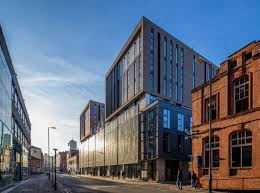
Manchester city centre has excellent amenities, and because the city is so large, they are all easily accessible.
Although many people commute into the city centre by bike, few will navigate the city centre or travel from one end of the city to the other by bike during the day. It is fair to say that it is not a particularly bike-friendly city, at least not currently.
But that doesn’t matter because the trams make it easy to get from one end of the city to the other. You can also hop on the Manchester free bus, which navigates the city centre and stops at all the useful spots.
It is also small enough that you can easily walk the whole city. You can walk from one end of the city centre, say Castlefield to NOMA in less than 30 minutes. You can walk a loop of the city centre in about an hour, so everything is easy to reach.
The city centre is a shopper’s dream: from independent record shops in the Northern Quarter to department stores like Harvey Nichols, luxury boutiques in Spinningfields, and everything in between, selling everything from rare trainers to snowboarding equipment.
Equally, you will find a truly eclectic range of restaurants, from Greek delicatessens to Argentinian steakhouses, tapas bars to tea shops, and everything in between. Manchester is proud to have recently been awarded its first Michelin star in 40 years, at the Northern Quarter restaurant Mana.
You will find a range of gyms, from 24/7 unmanned gyms to highly specialised gyms run by international football teams.
In terms of temporary accommodation, you will find plenty of Airbnb options, budget hotels, international 5-star hotels and boutique hotels.
You can find further details of amenities together with their addresses on this Manchester Directory of Resources that we have produced.
Outro
Manchester was expected to see 12% of office employment growth over the next five years in 2019. This growth would be supported by Greater Manchester’s status as one of the UK’s largest creative and digital clusters, employing 63,000 people and generating a GVA of £3.1 billion each year.
With new developments and office space deals in the pipeline, it is an exciting office space market to be watching.
So, that’s our overview of Manchester city centre as a place to live and work, an overview of the office space market, various workspace options and so on.
Although it doesn’t replace having a conversation with an office broker in Manchester, we hope it’s been of some use.
If you require any further information or would like to discuss your specific requirements, just get in touch, and we’ll be happy to help.
The audio version of Choosing Office Space to Rent in Manchester is available at the link.